
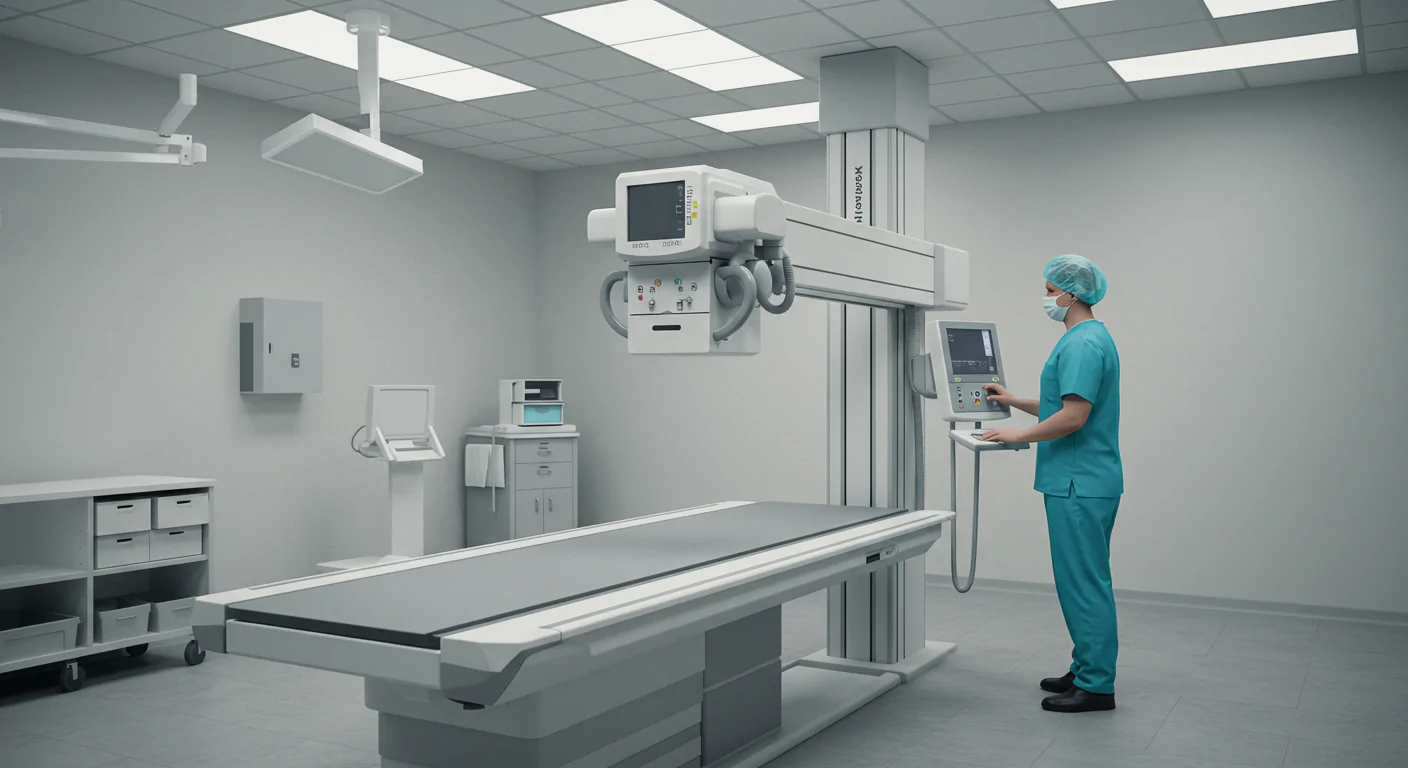
Your X-ray machine is one of the most important tools in your medical facility. It helps doctors see what’s going on inside a patient’s body so they can make the right diagnosis. But what happens when that machine starts to fail?
Blurry images, strange noises, or error messages might seem small at first—but they can lead to big problems. Delayed care, frustrated staff, and even safety risks can follow. The good news? A trained xray technician knows how to spot and fix these issues fast.
In this post, we’ll walk you through:
- Common signs your imaging equipment needs repair
- How an xray technician diagnoses what’s wrong
- What to expect when you book an on-site repair
This blog is based on proven service processes used by Syracuse Biomedical Services, trusted by healthcare teams across New York State.
I. Signs Your Imaging Device Needs Professional Repair
X-ray machines are built to last, but like all technology, they wear down over time. If you spot the following signs, your device may need immediate attention:
1. Blurry or Grainy Images
Poor image quality makes it hard for doctors to see fractures, lung issues, or other concerns. A bad X-ray can mean a missed diagnosis. This often happens due to misaligned parts or a weak X-ray beam.
2. Random Error Messages
If your machine is flashing alerts or system warnings, don’t ignore them. These messages may point to problems with the control board, power supply, or cooling system. Many facilities make the mistake of restarting the machine repeatedly instead of getting it checked.
3. Unusual Noises
Clicking, buzzing, or high-pitched sounds are not normal. They might mean internal parts are worn out or loose—especially fans, filters, or transformers.
4. Overexposed or Underexposed Images
Inconsistent brightness in X-rays means the machine may not be delivering the right dose. That’s dangerous for both the patient and the technician. It could also lead to retakes, wasting time and exposing patients to extra radiation.
5. Repeated Calibration Failures
Modern X-ray machines are programmed to self-check and recalibrate. If that keeps failing, it’s often a deeper hardware issue. Constant recalibration isn’t normal.
II. How an X-ray Technician Diagnoses Faults in X-ray Machines
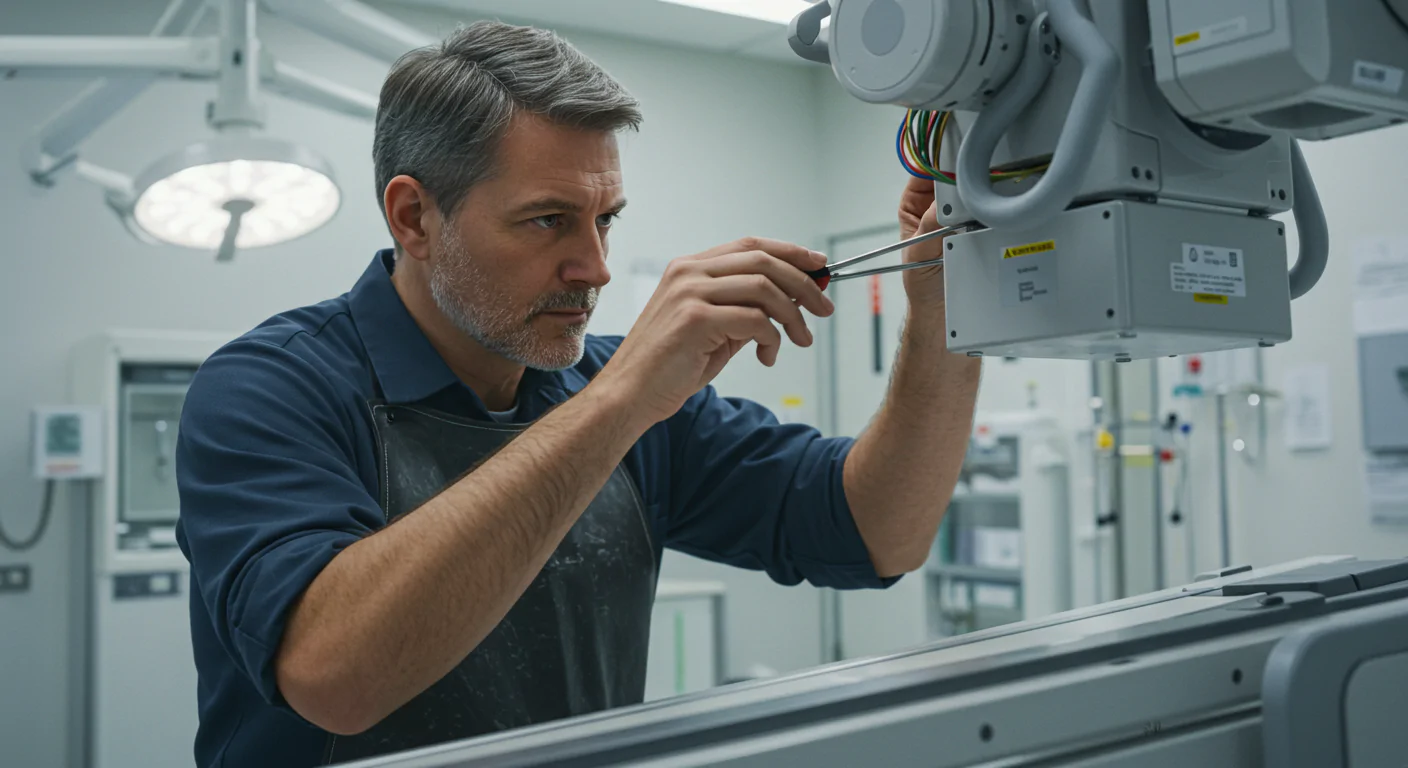
An xray technician (also known as a radiologic technologist) does more than just operate the machine. In many cases, they are the first to notice that something isn’t right. When the signs above appear, their job shifts from imaging to investigating.
A. Step-by-Step Diagnostic Process
Here’s how they find out what’s wrong:
1. Initial Visual Inspection
They check all major parts: wires, control panels, tubes, and moving arms. Are there cracks? Burn marks? Dust buildup? These signs give early clues.
2. Function Testing
They run test exposures to see if the machine responds as it should. Does the image take too long? Is the panel slow to respond? If so, it may point to a failing capacitor or control panel error.
3. Checking Logs and Error Codes
Most digital X-ray systems store fault logs. Technicians can read these to see patterns in errors—whether it’s a power drop, exposure failure, or system freeze.
4. Radiation Output Testing
They use a tool called a dosimeter to check how much radiation the machine is actually producing. Too much or too little radiation means poor image results—and safety risks.
5. Image Quality Assessment
Using special phantom tools (fake bones or body parts), they take test images to check clarity, contrast, and alignment.
6. Software Checks and Recalibration
Sometimes it’s not a hardware problem. Outdated software, memory glitches, or incorrect presets can cause serious issues. A technician can reset or reinstall the machine’s system settings.
B. Tools They Use
- Multimeters for electrical readings
- Waveform analyzers to check signal flow
- Dosimeters to measure radiation
- OEM diagnostic software for control checks
- Test phantoms to simulate body scans
III. Request an On-Site Repair Visit
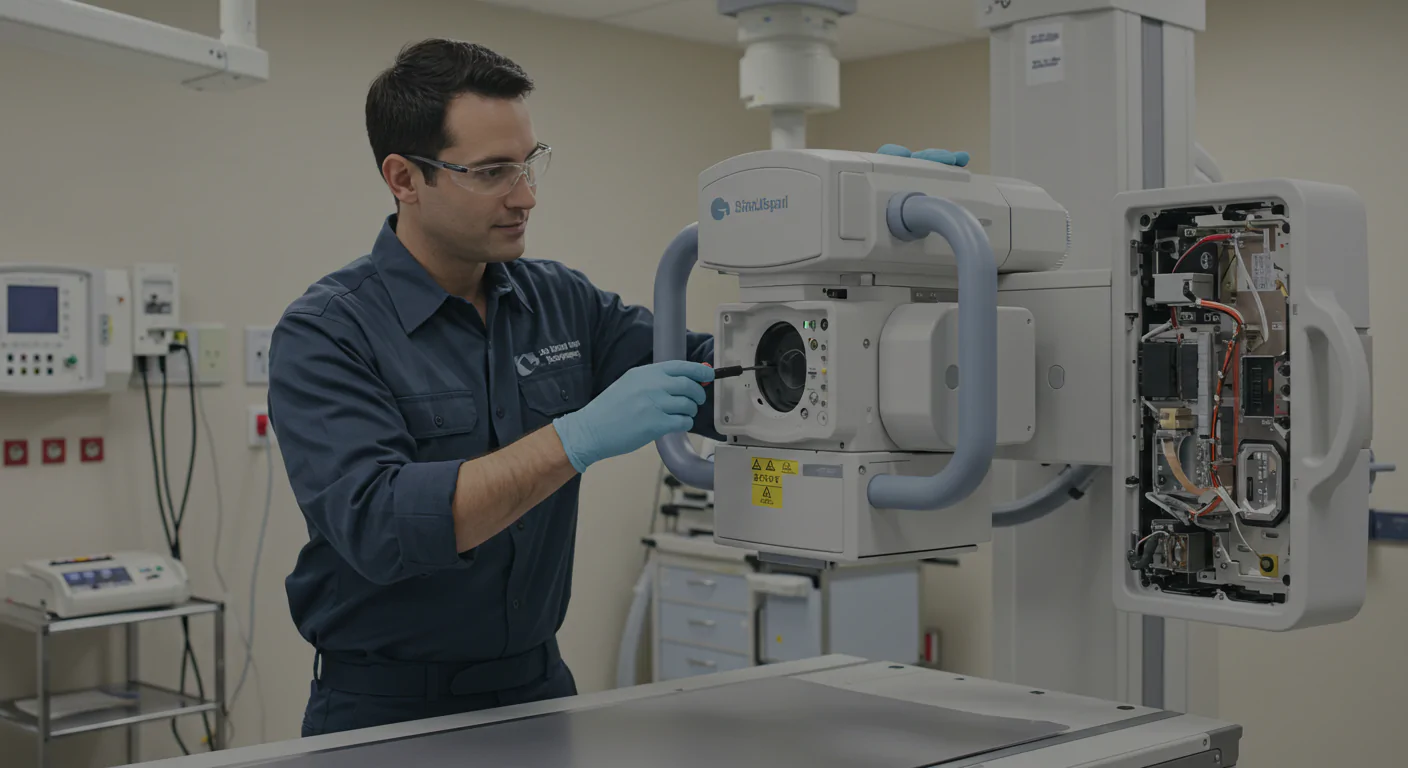
A. Why On-Site Repairs Matter
You can’t afford to ship your imaging device out for service—it could take days or even weeks. That’s why on-site repair is the best choice for most clinics and hospitals.
With Syracuse Biomedical Services, help comes directly to your door.
B. What Happens During a Visit
When you book a visit:
- A certified biomedical technician arrives with all the tools they need.
- They diagnose the problem using the same steps above.
- If they have the parts, they fix it immediately.
- If parts need ordering, they secure the fastest delivery available.
Most issues can be resolved on the first visit—minimizing downtime and avoiding repeat calls.
C. What Else Can You Get?
- Preventive Maintenance Plans – Stay ahead of repairs with scheduled service.
- Emergency Service Support – Fast turnaround when a machine suddenly fails.
- Certified Replacement Parts – Direct access to trusted, OEM-approved parts for safety and quality.
D. Ready to Book?
If your X-ray system is showing any signs of failure—or just isn’t working like it used to—now is the time to act.
Request an on-site repair from Syracuse Biomedical Services
Our expert team handles facilities across Upstate and Central New York. Fast response. Proven results. Trusted by healthcare providers since day one.
Conclusion
Your X-ray equipment plays a vital role in saving lives. When it malfunctions, you need a solution—fast and accurate. That’s where a trained xray technician comes in. From spotting early signs to running detailed tests, their role is key to keeping your imaging devices in top shape.
And when it’s time for expert service, Syracuse Biomedical Services delivers trusted, same-day support that healthcare teams count on. Whether it’s an on-site repair, preventive checkup, or sourcing a hard-to-find part, we’re here to help you stay up and running—without delay.
Want to learn more? Check out these sites:
1. How Much Do X-Ray Cost and What You Need to Know
2. Everything You Need to Know About Volumetric Pumps
3. How much do X-Ray Cost Without Insurance? What to Expect in 2025
4. Biomedical Equipment Services


