Choosing an autoclave sterilizer is about more than finding a machine that fits your budget or available space. The right system must match the instruments being processed, the facility’s workload, the required sterilization cycles, and the manufacturer’s instructions.
For healthcare facilities in Syracuse and the surrounding Central New York region, reliable sterilization equipment is an important part of daily operations. Understanding how different autoclave systems work can help facilities make better equipment, maintenance, and service decisions.
What Are the Different Types of Sterilizers Used in Healthcare?
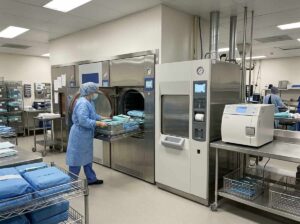
Sterilization methods vary based on the type of equipment being processed. Steam sterilization is widely used for items that can safely withstand heat, moisture, and pressure.
What Is Steam Sterilization?
Steam sterilization uses moist heat under controlled conditions to destroy microorganisms on compatible medical equipment and instruments.
Four key factors affect steam sterilization: steam, pressure, temperature, and time. The required conditions can vary depending on the sterilizer type, load, packaging, and items being processed, so facilities should follow the validated cycle and manufacturer instructions for the specific equipment and load. (Centers for Disease Control and Prevention [CDC], 2023).
This is why healthcare facilities should follow the validated cycle and manufacturer’s instructions for each specific sterilization load.
What Is an Autoclave Sterilizer?
An autoclave sterilizer is a type of steam sterilizer that uses controlled steam, pressure, temperature, and exposure time to sterilize compatible items.
Autoclaves come in different configurations and sizes. Some are designed for smaller workloads, while others are built for larger healthcare operations.
The equipment should be selected based on what the facility needs to sterilize, how often it operates, and what types of loads it will handle.
What Other Sterilization Methods Are Used in Healthcare?
Steam is not suitable for every medical device.
Some equipment cannot tolerate high temperatures or moisture. Depending on the device and its manufacturer’s instructions, a healthcare facility may need to use another validated sterilization method.
The key consideration is always compatibility. The sterilization method, cycle, packaging, and load configuration should be appropriate for the specific item being processed.
Why Does the Sterilization Method Matter?
A sterilizer can only perform properly when it is used correctly.
Cleaning and preparing instruments, using a sterilization cycle appropriate for the load, loading the sterilizer correctly, and monitoring the process all contribute to effective sterilization. The CDC recommends a comprehensive approach that includes proper cleaning and preparation, loading, operation, and monitoring of the sterilization process. (Centers for Disease Control and Prevention [CDC], 2023).
This makes sterilizer selection only one part of a larger equipment management process.
Autoclave Sterilizer: Which Type Is Right for Your Healthcare Facility?
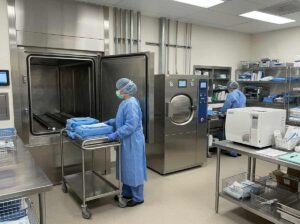
Once a facility determines that steam sterilization is appropriate, it must choose the right type of autoclave.
Two common configurations are gravity displacement and pre-vacuum, or dynamic-air-removal, sterilizers.
What Is a Gravity Displacement Autoclave?
A gravity displacement autoclave allows steam to enter the chamber and push air out through a drain.
This design can work well for certain compatible loads. However, trapped air can make steam penetration more difficult in porous or certain wrapped items.
For this reason, the type of load being processed is an important factor when selecting a gravity sterilizer.
What Is a Pre-Vacuum Autoclave?
A pre-vacuum autoclave uses a vacuum system to remove air from the chamber and load before steam enters.
Removing air can improve steam penetration, particularly when processing certain wrapped or porous loads. CDC guidance identifies pre-vacuum systems as dynamic-air-removal sterilizers designed to actively remove air before steam exposure. (CDC, 2024a).
However, a pre-vacuum system is not automatically the best option for every facility. The correct choice depends on the load, equipment specifications, validated cycles, and manufacturer’s instructions.
Gravity vs. Pre-Vacuum: What’s the Difference?
| Feature | Gravity Displacement | Pre-Vacuum |
| Air removal | Steam displaces air | Vacuum actively removes air |
| Load considerations | Suitable for compatible loads | Useful for certain wrapped or porous loads |
| Steam penetration | Depends on effective air displacement | Enhanced air removal can improve penetration |
| Facility needs | Depends on workload and load type | Depends on workload and required cycles |
| Maintenance | Requires routine inspection and maintenance | Requires routine inspection and vacuum-system maintenance |
The goal is not to choose the most advanced system. It is to choose the system that fits the facility’s actual sterilization needs.
How Does Capacity and Workload Affect Autoclave Selection?
Capacity is another important consideration.
A facility processing a high volume of instruments may need a larger chamber or equipment capable of handling its workload efficiently. A smaller facility may have different space, volume, and cycle requirements.
Overloading an autoclave can interfere with proper steam circulation. Loads should therefore be arranged according to the sterilizer manufacturer’s instructions.
Facilities should consider their typical workload, available space, load types, cycle requirements, and future equipment needs before purchasing an autoclave.
What Should You Check Before Purchasing an Autoclave?
Before selecting an autoclave sterilizer, healthcare facilities should consider:
- The types of instruments being sterilized
- Wrapped and unwrapped load requirements
- Porous or specialized loads
- Expected workload
- Chamber capacity
- Available cycle types
- Monitoring capabilities
- Installation and utility requirements
- Manufacturer maintenance requirements
- Parts availability
- Service and repair support
The purchase decision should also include the long-term cost of maintaining the equipment.
A reliable autoclave still requires preventive maintenance, performance checks, and timely repair when problems occur.
How Do You Know an Autoclave Is Working Properly?
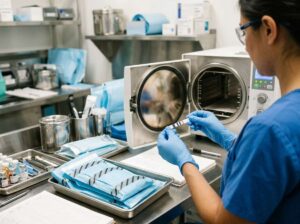
Buying the right equipment is only the beginning. Healthcare facilities also need a process for monitoring sterilization performance.
Why Do Temperature, Pressure, and Time Matter?
Steam sterilization depends on controlled conditions.
Temperature and pressure help create the environment needed for sterilization, while exposure time determines how long the load remains under those conditions. However, there is no single cycle that applies to every load.
For example, CDC guidance provides different minimum exposure times depending on the sterilizer type and load. Facilities should therefore follow the validated cycle for their specific equipment rather than applying one universal setting. (CDC, 2024a).
How Is an Autoclave Monitored?
Healthcare facilities use mechanical, chemical, and biological indicators to monitor sterilization processes.
Mechanical monitoring reviews information such as time, temperature, and pressure.
Chemical indicators respond to sterilization conditions and can help show whether an item was exposed to the process. However, a chemical indicator alone does not prove that sterilization was achieved.
Biological indicators provide another level of testing by using resistant microorganisms to evaluate the sterilization process.
The CDC recommends using these monitoring methods together as part of a comprehensive sterilization quality program. (CDC, 2024b).
Why Is Preventive Maintenance Important?
Like other medical equipment, an autoclave requires regular care.
Preventive maintenance can help identify equipment problems before they lead to unexpected downtime. Depending on the model, maintenance may include inspection of components, controls, seals, sensors, and other operating systems.
Maintenance should follow the manufacturer’s recommendations and the facility’s equipment management procedures.
A well-maintained sterilizer can support more reliable operation and help healthcare facilities address problems before they become larger equipment issues.
Choosing and Maintaining the Right Autoclave Sterilizer for Your Facility

The right autoclave should meet the facility’s current needs while remaining practical to maintain over its service life.
When Should an Autoclave Be Repaired?
Professional service may be needed when an autoclave:
- Repeatedly fails to complete cycles
- Shows temperature or pressure problems
- Produces recurring alarms
- Develops leaks
- Has damaged seals or components
- Fails performance testing
- Experiences repeated sterilization problems
Equipment problems should be investigated rather than ignored, especially when the sterilizer is part of a healthcare facility’s routine infection-control process.
How Can Biomedical Equipment Services Help?
Syracuse Biomedical Services provides sterilizer maintenance and repair, along with broader biomedical equipment services for healthcare facilities in Syracuse and the surrounding Central New York region.
Its services include preventive maintenance, calibration, repair, compliance testing, and documentation support. The company also provides on-site and in-house repair solutions for a range of biomedical equipment.
This type of ongoing support can help facilities address equipment problems, maintain performance, and reduce unnecessary downtime.
Why Consider Service Support Before Buying?
An autoclave is a long-term equipment investment. Service support should therefore be part of the purchasing decision.
Before purchasing equipment, facilities should consider who will provide preventive maintenance, troubleshooting, repair, testing, and documentation support when needed.
Syracuse Biomedical Services also provides equipment sales and consultation to help healthcare facilities select equipment based on their specific requirements and budget.
Need Autoclave Sterilizer Service in Syracuse, NY?
Selecting the right autoclave sterilizer is an important decision, but keeping that equipment reliable requires ongoing maintenance, monitoring, testing, and repair.
If your healthcare facility in Syracuse or the surrounding Central New York area needs sterilizer maintenance, autoclave repair, biomedical equipment services, calibration, or compliance testing and documentation, Syracuse Biomedical Services can help.
Explore the company’s biomedical equipment services or contact Syracuse Biomedical Services to discuss your facility’s equipment needs and service requirements.