
When a patient arrives in the emergency room with stroke symptoms, doctors often order a CT scan within minutes. When a neurologist needs a detailed image of brain tissue, an MRI is usually the better choice.
Both systems are essential in modern healthcare. But for hospital administrators and facility managers, the question goes beyond clinical use. You may ask: what is a CT scan compared to MRI, and what does that difference mean for installation, maintenance, cost, and compliance?
Understanding these imaging technologies helps facilities protect uptime, patient safety, and long-term equipment value. In this guide, we explain the key differences and what they mean from a biomedical service perspective.
CT Scan vs. MRI: Key Differences in Imaging Technology

How CT Scans Work
A CT scan is a medical imaging procedure — what is a CT scan? It uses rotating X-rays to create detailed cross-sectional images of the body. The system captures multiple images from different angles, and a computer then combines them into a 3D image, allowing doctors to examine bones, organs, blood vessels, and soft tissues in detail.
CT imaging is widely used for:
- Trauma and emergency care
- Stroke evaluation
- Lung and chest imaging
- Bone injuries
CT scans are fast. In emergency settings, speed can save lives. But what is a CT scan? Computed tomography (CT) scans are among the most frequently performed imaging procedures worldwide, with an estimated 375 million CT scans conducted annually, reflecting their widespread use in trauma, stroke, cancer, and other clinical evaluations (Collective Minds Radiology, 2024).
From an operational standpoint, understanding what is a CT scan helps explain why CT systems rely heavily on the X-ray tube. The tube generates high heat during use, and over time, this critical component wears down and may require replacement. In high-volume hospitals, effective tube management is one of the most important factors for maintaining reliable imaging performance.
Preventive maintenance, heat load monitoring, and calibration testing help extend tube life and reduce downtime.
How MRI Systems Work
MRI (magnetic resonance imaging) uses strong magnetic fields and radio waves to produce detailed images. Unlike CT, MRI does not use ionizing radiation.
MRI systems are best for:
- Brain imaging
- Spinal cord evaluation
- Joint and soft tissue injuries
- Tumor detection
MRI produces excellent soft tissue contrast. However, scan times are longer. Patients must remain still inside the magnet bore during the procedure.
MRI systems require complex infrastructure. They use superconducting magnets cooled by liquid helium. MRI scanners rely on strong magnetic fields and radiofrequency energy to produce images, and the strong static magnetic field and changing magnetic fields present safety concerns that must be managed with appropriate screening and safety protocols (U.S. Food and Drug Administration [FDA], n.d.).
From a biomedical service perspective, MRI systems require:
- Cooling system monitoring
- Gradient coil inspections
- Cryogen level checks
- Magnet safety zone verification
Cooling failures can cause major system disruptions. A magnet quench can result in expensive downtime and safety risks if not managed properly.
Side-by-Side Comparison: Clinical and Operational Differences
| Feature | CT Scan | MRI |
| Technology | X-ray imaging | Magnetic field & radio waves |
| Radiation | Yes | No |
| Scan Speed | Very fast | Slower |
| Best For | Trauma, lungs, bone | Brain, joints, soft tissue |
| Installation | Radiation shielding | RF shielding & magnet zoning |
| Common Service Issue | Tube wear | Cooling system maintenance |
Both systems are powerful tools. Many full-service hospitals operate both CT and MRI to meet patient needs.
But understanding the clinical difference is only the first step. The next question is how these systems compare from a facility management standpoint.
What Is a CT Scan Compared to MRI? A Facility Manager’s Decision Guide
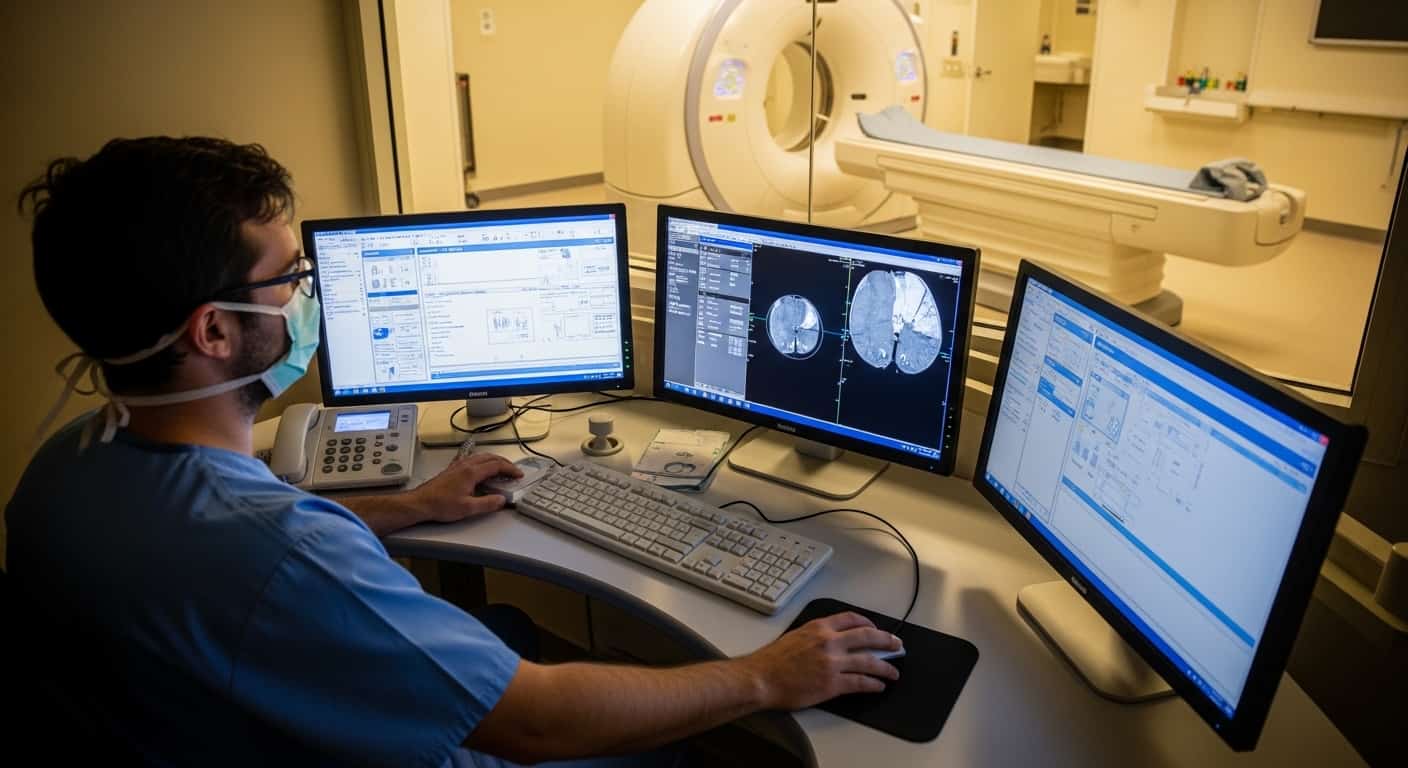
For healthcare leaders, asking what is a CT scan compared to MRI often leads to deeper questions:
- What are the infrastructure requirements?
- What is the total cost of ownership?
- How often will the system need service?
- How can we reduce downtime?
Let’s look at these factors more closely.
Infrastructure and Facility Preparation
CT installation typically requires:
- Radiation shielding in walls
- Adequate electrical supply
- HVAC systems to manage heat
MRI installation requires:
- Radiofrequency (RF) shielding
- Magnetic safety zones
- Helium venting systems
- Structural floor support
Improper HVAC sizing is a common issue for CT rooms. Excess heat can shorten tube life and increase emergency repairs.
For MRI, shielding mistakes can delay inspection approvals and accreditation readiness. Careful planning reduces these risks.
Total Cost of Ownership
The purchase price of a CT scanner or MRI machine is only part of the cost.
Facilities must also plan for:
- Annual service contracts
- Replacement parts
- Energy use
- Preventive maintenance
- Compliance inspections
- Downtime revenue loss
Life cycle cost analysis (LCCA) and total cost of ownership (TCO) frameworks help healthcare facilities assess and plan for long-term imaging equipment expenses, including maintenance, energy, and service needs across the lifetime of CT and MRI systems (Sahu et al., 2020).
CT systems may require tube replacement after heavy use. MRI systems may need cryogen refills or cooling system repairs.
Without a structured maintenance program, unexpected repair costs can strain budgets.
Maintenance and Downtime Risks
Imaging systems are high-value assets. Downtime affects:
- Patient scheduling
- Referral relationships
- Emergency department flow
- Revenue
CT preventive maintenance often includes:
- Tube output checks
- Detector calibration
- Radiation testing
MRI preventive maintenance includes:
- Gradient system inspection
- Chiller system evaluation
- Magnet stability checks
Facilities with proactive maintenance programs experience fewer emergency breakdowns. Routine service protects patient safety and extends equipment life.
Compliance and Documentation
Imaging departments must meet strict regulatory standards. Documentation is essential for:
- Joint Commission inspections
- Radiation safety audits
- Equipment calibration verification
- State compliance reviews
Accurate maintenance logs and calibration records protect facilities during inspections. A knowledgeable biomedical partner helps maintain compliance readiness year-round.
Need Help Maintaining Both CT & MRI Systems? Explore Our Multi-Modality Service Programs
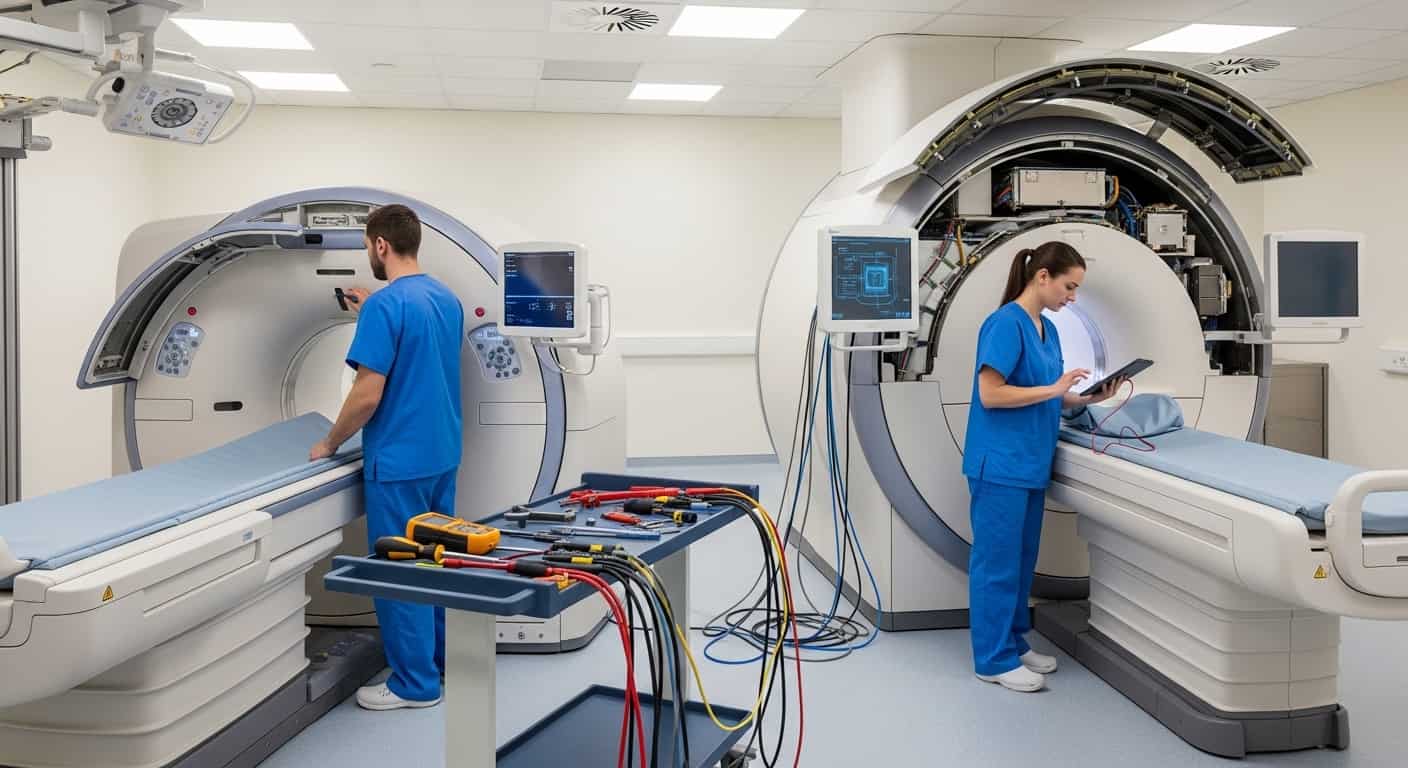
Operating both CT and MRI systems can be complex. Managing separate vendors for each system can create confusion and service gaps.
A coordinated multi-modality service program offers clear advantages.
Why Multi-Modality Service Reduces Risk
When one experienced biomedical provider supports both systems:
- Maintenance schedules are aligned
- Documentation is standardized
- Response times improve
- Communication is simplified
This reduces operational stress for imaging departments.
Protecting Revenue and Patient Care
Imaging downtime can cost thousands of dollars per day. In trauma centers, CT outages disrupt emergency workflow immediately.
Preventive maintenance helps:
- Identify tube wear early
- Detect cooling system issues
- Reduce unexpected shutdowns
- Protect scan quality
Proactive service is more cost-effective than reactive repair.
Trusted Imaging Equipment Support in Central New York
Syracuse Biomedical Services provides expert biomedical equipment support for healthcare facilities across Central New York. For imaging departments, understanding what is a CT scan and how it operates is critical to keeping equipment running smoothly. Our team ensures your CT scanners and other biomedical devices perform reliably, so patient care is never compromised.
We focus on:
- Preventive maintenance planning
Our goal is simple: keep your imaging systems running safely, efficiently, and reliably.
Take the Next Step Toward Reliable Imaging Performance
CT and MRI systems are essential to patient care. Understanding what is a CT scan compared to MRI helps guide purchasing and operational decisions. But maintaining these systems properly is what protects your investment.
If your facility operates CT, MRI, or other diagnostic imaging equipment, now is the time to review your maintenance strategy.
Contact Syracuse Biomedical Services today to schedule a preventive maintenance consultation or request a customized service proposal.
Frequently Asked Questions (FAQ)
Q1: What is the difference between a CT scan and an MRI?
A CT scan uses X-rays to create detailed cross-sectional images, making it fast and ideal for trauma, stroke, or bone evaluation. MRI uses strong magnets and radio waves, producing high-contrast images of soft tissues, such as the brain, joints, and muscles. MRI does not use radiation.
Q2: Which imaging system is faster for patient scans?
CT scans are significantly faster, often completed in minutes, which is why they are commonly used in emergency and trauma settings. MRI scans take longer because they capture more detailed soft tissue information.
Q3: How often do CT and MRI machines require maintenance?
Preventive maintenance schedules vary by manufacturer and usage. CT systems typically need routine tube checks and detector calibration, while MRI systems require cooling system checks, gradient coil inspections, and magnet monitoring. Partnering with a certified biomedical service provider helps ensure compliance and reduces downtime.
Q4: What safety considerations are important for MRI systems?
MRI scanners produce strong static and changing magnetic fields. Safety measures include screening patients and staff for metal implants or devices, maintaining proper magnet zones, and following operational protocols to prevent accidents.
Q5: Can one service provider maintain both CT and MRI systems?
Yes. Multi-modality service programs allow a single biomedical partner to maintain CT and MRI systems, aligning maintenance schedules, standardizing documentation, and improving response times. This reduces risk, downtime, and administrative complexity.
To learn more about Biomedical Services, check out these resources:
- A Simple Guide to Understanding Sphygmomanometer Parts
- CT Scan Cost Explained: With and Without Insurance
- Trust the Experts for Delicate Lens Care: Learn How to Clean the Microscope Lens Without Common Pitfalls
- Restrictions While Wearing A Holter Monitor
- How Much Do X Rays Cost Without Insurance? What to Expect in 2026


