Introduction
When kidneys stop working properly, the body can no longer remove waste, extra fluids, and harmful toxins. This is where dialysis becomes life-saving. Many people search for answers to one key question: how does a dialysis machine work?
A dialysis machine is not just a piece of hospital equipment it acts like an artificial kidney. It helps clean the blood, balance fluids, and keep essential minerals stable in patients with kidney failure. In real healthcare settings, this process happens several times a week for patients who depend on it to survive.
In this article, we will break down the science in a simple way, show how the machine works step by step, and explain why proper maintenance and biomedical support are critical for safe treatment. This guide follows real-world practices used in hospitals and dialysis centers supported by biomedical service teams like Syracuse Biomedical Services.
The Science of Blood Filtration: Early Insights Into How Does a Dialysis Machine Work
Why the Human Body Needs Kidney Filtration Support
Healthy kidneys act like natural filters. They remove waste products, balance fluids, and regulate blood pressure. When kidneys fail, harmful substances like urea and creatinine build up in the blood.
Dialysis replaces this lost function. It does not cure kidney disease, but it performs the essential job of filtering blood.
In real clinical environments, patients often rely on dialysis treatments multiple times per week. Without it, toxins would quickly reach dangerous levels.
How Dialysis Mimics Natural Kidney Function
To understand how does a dialysis machine work, it helps to compare it to natural kidney filtration. Inside the machine is a filter called a dialyzer. It contains thousands of tiny hollow fibers that act like artificial kidney tubules.
Blood flows through these fibers while a special fluid surrounds them. Waste moves out of the blood and into this fluid, which is then safely discarded.
Biomedical engineers regularly inspect these systems to ensure flow rates, pressure levels, and membrane integrity remain stable during treatment.
The Basic Science Behind Blood Cleaning
Dialysis uses simple physical principles:
- Waste moves from areas of high concentration to low concentration
- Extra fluid is pulled out using controlled pressure
- Electrolytes are balanced to keep the heart and muscles working properly
These processes happen automatically inside the machine. According to the National Institute of Diabetes and Digestive and Kidney Diseases (NIDDK), dialysis helps “remove waste products and extra fluid from the blood when the kidneys can no longer perform these functions properly” (NIDDK, 2024).
How Does a Dialysis Machine Work in Removing Toxins and Balancing Fluids?
Step-by-Step Blood Flow Through the Machine
To clearly understand how does a dialysis machine work, follow the blood pathway:
First, blood is gently drawn from the patient through tubing. It enters the dialyzer, where waste products are filtered out. Cleaned blood is then returned to the body.
Throughout this process, the machine constantly monitors pressure and flow speed. This ensures blood moves safely without clotting or air contamination.
In real biomedical service practice, technicians often find that unstable flow rates are one of the earliest signs of equipment issues.
How Dialysate Removes Waste and Restores Balance
Dialysate is a specially prepared cleaning fluid used in dialysis machines. It contains carefully balanced levels of minerals like sodium, potassium, and calcium.
As blood flows through the dialyzer, waste products move into the dialysate. At the same time, the fluid helps restore proper electrolyte balance.
If the dialysate mixture is incorrect, it can cause serious complications. That is why biomedical technicians carefully test and calibrate mixing systems during maintenance visits.
Controlled Fluid Removal for Patient Safety
One of the most important functions of a dialysis machine is removing excess water from the body. This process is called ultrafiltration.
The machine uses pressure control systems to remove fluid slowly and safely. If too much fluid is removed too quickly, patients may experience low blood pressure or dizziness.
In clinical environments, these settings are adjusted based on patient condition and medical prescriptions. This is where trained biomedical support ensures the machine performs accurately and safely.
Safety Systems That Protect Patients
Dialysis machines include advanced safety features such as:
| Safety Feature | Purpose in a Dialysis Machine | Why It Matters for Patient Safety |
| Air Bubble Detectors | Detects any air in the blood tubing during treatment | Prevents air embolism, which can be life-threatening |
| Pressure Sensors | Monitors blood flow pressure inside the tubing and dialyzer | Helps prevent tube rupture, clotting, or unsafe blood flow changes |
| Blood Leak Detection Systems | Identifies if blood is leaking into the dialysate fluid | Ensures blood loss is detected immediately to avoid complications |
| Automatic Alarms | Triggers alerts for any abnormal machine readings or system errors | Allows immediate technician or nurse response to prevent harm |
These systems are essential because dialysis involves direct interaction with blood circulation.
Regular maintenance is important because even small calibration issues can lead to false alarms or missed warnings. This is why hospitals rely on biomedical service providers to ensure equipment accuracy.
Professional Dialysis Equipment Performance Optimization Services

Why Dialysis Machine Performance Matters
Dialysis machines operate in life-critical environments. Even small performance issues can affect treatment quality and patient safety.
Hospitals depend on consistent machine accuracy because patients require regular treatments, often several times per week.
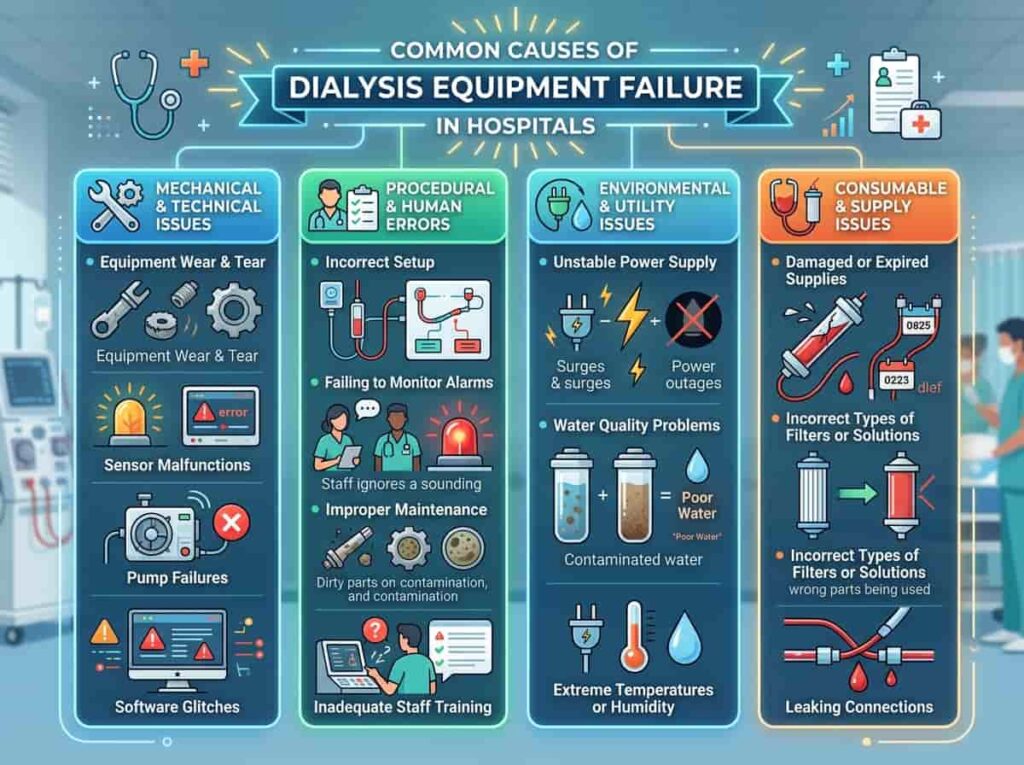
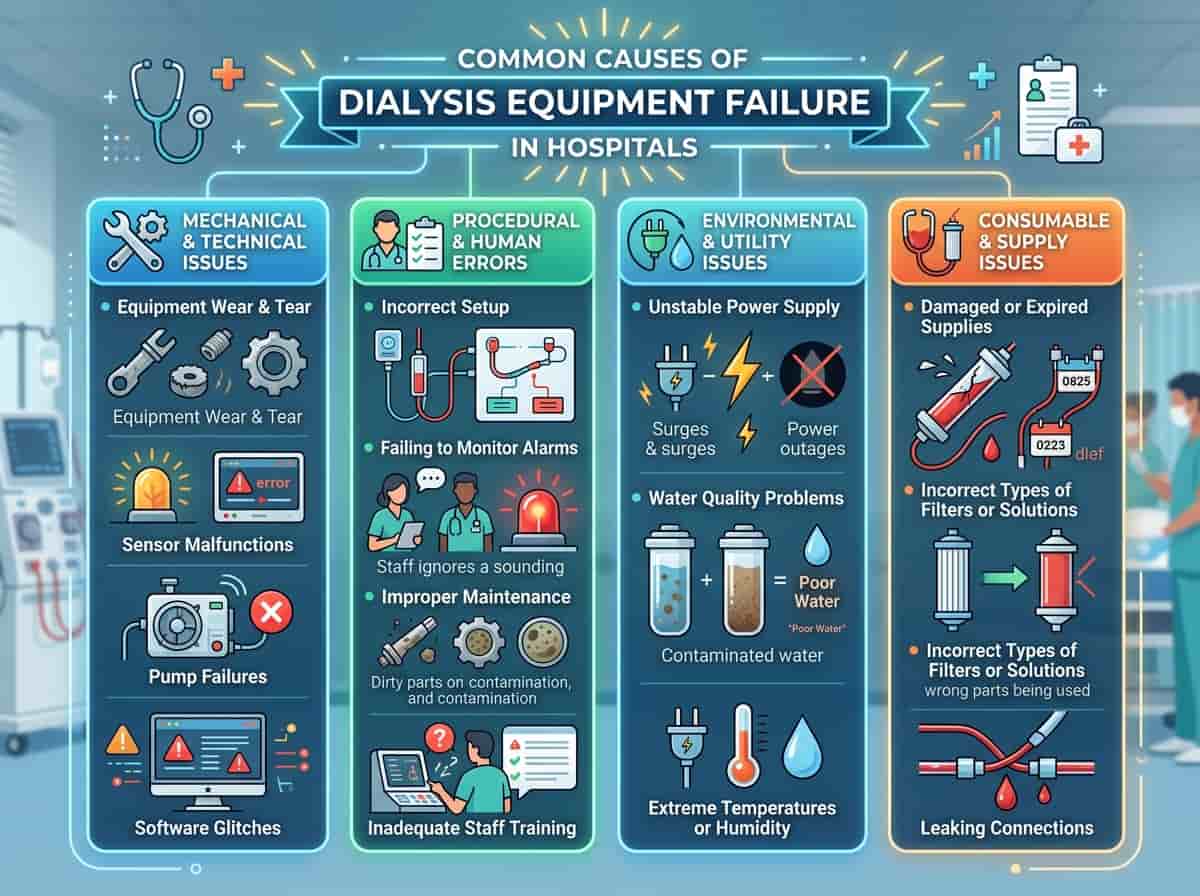
Real-world service data shows that many failures come from gradual wear, sensor drift, or lack of preventive maintenance rather than sudden breakdowns.
Common Issues Found in Dialysis Equipment
Biomedical technicians frequently encounter issues such as:
- Inaccurate pressure readings
- Flow rate inconsistencies
- Faulty alarms or sensor errors
- Tubing blockages or wear
- Calibration drift over time
These problems often do not appear until the machine is under full clinical operation. This makes routine inspection essential.
How Syracuse Biomedical Services Supports Dialysis Care
Syracuse Biomedical Services provides expert support for healthcare facilities that rely on dialysis equipment.
Their services include:
- Full diagnostic testing and system evaluation
- Sensor calibration and performance tuning
- Preventive maintenance\ programs
- Emergency repair and troubleshooting
- Compliance and safety inspections
These services help ensure dialysis machines operate within safe clinical standards and maintain consistent performance.
In healthcare environments, this type of support reduces downtime and helps protect patient care schedules.
Preventive Maintenance vs Emergency Repairs
Preventive maintenance focuses on identifying problems before they cause failure. It improves reliability and extends equipment lifespan.
Emergency repairs, while sometimes unavoidable, can disrupt treatment schedules and place stress on healthcare teams.
Facilities that invest in scheduled biomedical maintenance often experience fewer breakdowns and more stable long-term equipment performance.
Conclusion: Keeping Dialysis Care Safe and Reliable

Understanding how does a dialysis machine work helps healthcare professionals and facility managers appreciate the importance of precision and maintenance in dialysis care. These machines perform a critical role in replacing lost kidney function and supporting patient survival.
However, performance depends heavily on proper calibration, safety checks, and ongoing biomedical support.
Syracuse Biomedical Services provides trusted expertise in dialysis machine maintenance, repair, and optimization. Their work helps healthcare facilities maintain safe, efficient, and reliable treatment environments.
If your facility relies on dialysis equipment, now is the right time to ensure it is operating at peak performance. Contact Syracuse Biomedical Services for professional biomedical support, preventive maintenance, and emergency repair services that keep patient care uninterrupted and safe.
Frequently Asked Questions:
1. How does a dialysis machine work?
A dialysis machine works by filtering waste, toxins, and extra fluid from the blood when the kidneys are no longer able to do so. It uses a dialyzer (artificial kidney) to clean the blood before returning it to the body.
2. Can you explain how does a dialysis machine work in simple terms?
How does a dialysis machine work in simple terms: blood is taken out of the body, cleaned through a special filter, and then returned without harmful waste or excess fluid, helping maintain balance in the body.
3. What is the role of dialysate in dialysis?
Dialysate is a special fluid that helps remove waste and balance electrolytes while blood flows through the machine.
4. How long does a dialysis session usually take?
A typical hemodialysis session lasts about 3 to 5 hours and is usually done multiple times per week.
5. Why is dialysis needed?
Dialysis is needed when kidneys fail and can no longer remove waste and excess fluid from the body effectively.
For more information, please refer to the following links:
- A Simple Guide to Understanding Sphygmomanometer Parts
- CT Scan Cost Explained: With and Without Insurance
- Trust the Experts for Delicate Lens Care: Learn How to Clean the Microscope Lens Without Common Pitfalls
- Restrictions While Wearing A Holter Monitor
- How Much Do X Rays Cost Without Insurance? What to Expect in 2026