When you have an injury or sudden health concern, knowing where to go can save time and help you get the right care. If you are asking, “Does urgent care do CT scans?”, the answer depends on the location. Some urgent care centers offer CT imaging, while others provide basic tests, such as X-rays, and send patients elsewhere for advanced scans.
Understanding the difference between urgent care and an emergency room can help you make a better choice. For healthcare facilities, there is another important concern: keeping medical equipment in good working order. Reliable equipment helps healthcare teams carry out daily tasks and manage patient care.
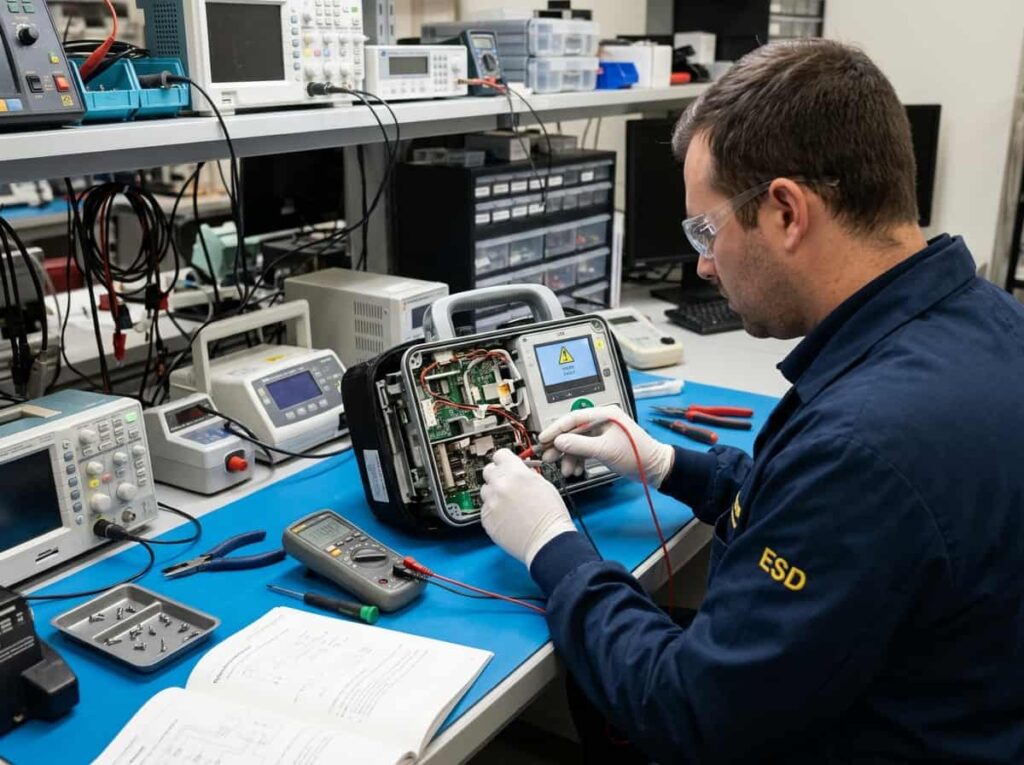
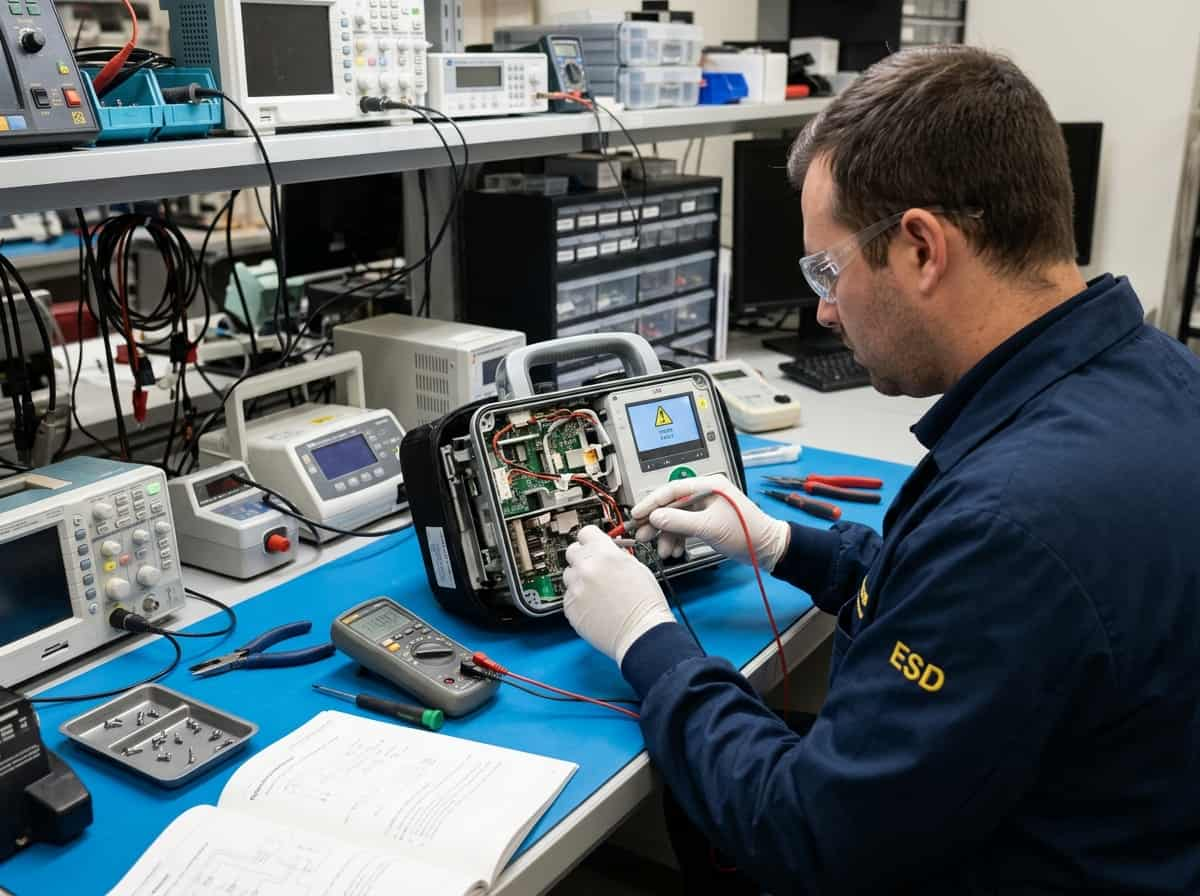
Syracuse Biomedical Services supports healthcare facilities in Syracuse and the surrounding Central New York region with biomedical equipment repair, preventive maintenance, and calibration support.
Urgent Care vs. Emergency Room: Where Should You Go for Medical Imaging?
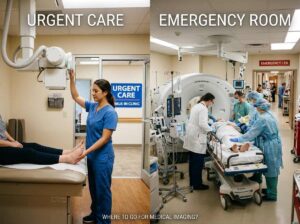
Urgent care centers treat health problems that need prompt attention but are not usually life-threatening. Emergency rooms handle serious injuries and illnesses that may need immediate treatment, advanced testing, or specialist care.
The right choice depends on your symptoms and the services available at the facility.
What Services Does Urgent Care Usually Offer?
Many urgent care centers treat minor injuries, sprains, infections, and common illnesses. Some also offer on-site X-rays and laboratory tests.
Advanced imaging services vary by facility. For example, UCSF Health reports that most of its urgent care clinics offer CT scans, while University of Maryland Urgent Care states that its centers do not perform CT scans (UCSF Health, n.d.; University of Maryland Medical System, n.d.).
This difference shows why you should check the services at the exact location before visiting.
When Should You Go to the Emergency Room?
An emergency room is designed to assess and treat serious or life-threatening conditions. It may offer CT scans and other advanced imaging as part of emergency care.
Seek emergency help for warning signs such as:
- Severe chest pain or difficulty breathing
- Signs of a stroke, such as sudden weakness or trouble speaking
- Severe bleeding or major injuries
- A serious head injury
- Sudden loss of consciousness
If you believe you are experiencing a medical emergency in the United States, call 911. Do not delay emergency care while searching for a place that offers CT scans.
What Is the Difference Between a CT Scan and an X-Ray?
Both tests use X-rays to create images, but they produce different results.
| Imaging Type | How It Works | Common Uses |
| X-ray | Creates a two-dimensional image of the inside of the body. | Often used to examine bones and check for certain chest conditions. |
| CT scan | Uses X-rays and computer processing to create detailed, cross-sectional images of the body. | Helps healthcare providers examine internal organs, bones, blood vessels, and other body structures. |
A CT scan can show more detail about many internal structures. However, it is not always the right test for every health concern. Your healthcare provider can explain which exam may be suitable.
Does Urgent Care Do CT Scans? When to Consider a Hospital or Emergency Department

Some urgent care centers perform CT scans, but many do not. Availability depends on the facility, its equipment, staffing, and the services it provides.
If your healthcare provider recommends a CT scan, confirm where the test can be performed before making an appointment. If an urgent care center does not offer the scan, its staff may direct you to a hospital or imaging center.
How Can You Check Whether an Urgent Care Center Offers CT Scans?
Start by checking the facility’s official website or calling its office. Do not assume that every location in the same healthcare network offers the same tests.
Before visiting, ask:
- Do you perform CT scans at this location?
- Is the type of scan I need available?
- Do I need a referral or an appointment?
- Do you accept my insurance?
- If you cannot perform the scan, where should I go next?
These questions can help you avoid an unnecessary trip and understand your options.
What Should You Consider When Choosing an Imaging Facility?
When comparing imaging centers, look at more than distance. Check the services offered, appointment rules, opening hours, insurance coverage, and possible costs.
You should also ask how the results will be shared with your healthcare provider. The imaging team performs the scan, while your provider helps explain the results and decide what care may be needed.
If you are unsure where to go, ask your healthcare provider for guidance. Do not delay emergency treatment to compare locations.
Why Does CT Scanner Reliability Matter?
Patients rely on healthcare facilities to provide the right tests when needed. Behind these services, staff depend on medical equipment that must be checked and maintained.
CT scanners are complex systems that require proper maintenance, quality-control testing, and safety procedures. The American College of Radiology (ACR, 2025) states that CT facilities applying for or maintaining ACR accreditation must follow a documented quality-control program, complete regular equipment testing, and maintain records of maintenance and service activities.
When equipment shows an error or fails a performance check, staff should follow facility procedures and arrange an assessment by the right service provider. Required checks should be completed before the equipment returns to clinical use.
Medical Equipment Repair for Healthcare Facilities: Preparing for Equipment Problems and Downtime
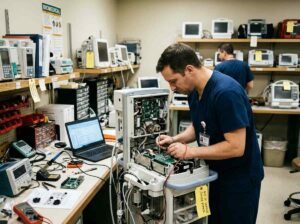
For hospitals, clinics, and other healthcare organizations, equipment problems can disrupt daily work. A clear maintenance plan helps staff report faults, arrange service, and manage equipment needs.
What Are the Warning Signs That Medical Equipment Needs Service?
Equipment may need attention when staff notice repeated error messages, unexpected shutdowns, unusual operation, visible damage, or failed performance checks.
Staff should document the problem and follow the facility’s safety procedures. If equipment may be unsafe or does not meet required checks, it should be handled according to the facility’s rules before further use.
The right response depends on the device and the fault. An appropriate technical assessment can help identify the issue and determine the next step.
How Does Preventive Maintenance Help Healthcare Facilities?
Preventive maintenance involves planned inspections, cleaning, functional checks, and other service tasks suited to the equipment. It helps teams identify developing issues and plan service before a problem causes a major interruption.
A suitable maintenance program may help healthcare facilities:
- Identify equipment concerns early
- Plan service around daily operations
- Keep maintenance records organized
- Support equipment performance
- Reduce the risk of unexpected downtime
Maintenance needs vary by device. Facilities should follow manufacturer guidance and applicable requirements, including any special testing required after repairs.
How Can You Choose a Biomedical Equipment Repair Provider?
Before selecting a service provider, confirm that it has experience with the type of equipment you need serviced. Ask about its service scope, inspection process, documentation, and the checks required after repair.
Specialized equipment, such as CT scanners, may require specific technical expertise and oversight from qualified medical physics professionals. General biomedical equipment experience does not automatically mean a provider can service every imaging system.
Sharing the device’s make and model, error messages, and service history can help the provider assess your request.
How Can Syracuse Biomedical Services Support Your Facility?
Syracuse Biomedical Services provides biomedical equipment repair, preventive maintenance, and calibration support for healthcare facilities in Syracuse and the surrounding Central New York region.
Its services help healthcare organizations manage equipment needs, plan routine maintenance, and address performance concerns. The company also offers service options based on the needs of healthcare facilities.
If your facility needs support, prepare the equipment details and explain the problem your team has noticed. For CT scanners or other specialized imaging systems, contact the company first to confirm that the specific equipment falls within its service capabilities.
Explore biomedical equipment repair services and preventive maintenance programs to learn more.
Conclusion
If you are wondering, “Does urgent care do CT scans?”, remember that imaging services vary by location. Check with the facility before visiting, and follow your healthcare provider’s guidance about the right test and care setting. For life-threatening symptoms, seek emergency help right away.
Healthcare facilities also need a clear plan for equipment maintenance and repair. Regular service, proper fault reporting, and suitable technical support can help teams manage equipment concerns and reduce avoidable disruptions.
Need biomedical equipment repair or preventive maintenance in Central New York? Visit Syracuse Biomedical Services to explore its services or contact the team to discuss your facility’s equipment needs.