When a cardiac emergency occurs, every part of the response matters. CPR, emergency medical care, and a defibrillator can each play an important role. But why is defibrillation important? For certain cardiac arrest rhythms, defibrillation can be a critical treatment that helps restore an organized heart rhythm.
For healthcare facilities, the importance of defibrillation goes beyond knowing how the procedure works. Defibrillators must also be available, functional, and properly maintained when they are needed. Reliable biomedical equipment support can help facilities keep these devices ready for patient care.
What Is Defibrillation and How Does It Work?
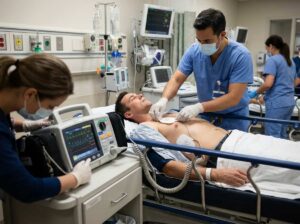
Defibrillation is an emergency treatment that delivers an electrical shock to the heart to treat certain life-threatening cardiac rhythms. In adults experiencing cardiac arrest caused by ventricular fibrillation or pulseless ventricular tachycardia, the American Heart Association recommends defibrillation as part of the resuscitation response.
What Is Defibrillation?
Defibrillation uses an electrical shock delivered through electrodes or pads placed on the patient’s chest. The goal is to stop a dangerous shockable rhythm so the heart may regain an organized rhythm.
Defibrillation is not used for every cardiac arrest or every abnormal heart rhythm. Its use depends on the patient’s rhythm and the clinical situation.
This distinction is important because cardiac arrest can occur with different rhythms. The 2025 American Heart Association guidelines identify ventricular fibrillation (VF) and pulseless ventricular tachycardia (pVT) as rhythms that can require defibrillation.
How Does a Defibrillator Work?
A defibrillator delivers a controlled electrical shock through pads or electrodes. The device may also analyze the patient’s heart rhythm, depending on its design.
Automated external defibrillators (AEDs), for example, are designed to analyze the heart rhythm and determine whether a shock is appropriate. Manual defibrillators provide healthcare professionals with additional controls for managing the patient’s rhythm and treatment.
The exact operation, energy settings, testing procedures, and maintenance requirements depend on the specific device and manufacturer.
Which Heart Rhythms Can Require Defibrillation?
Defibrillation is particularly important for ventricular fibrillation and pulseless ventricular tachycardia during cardiac arrest.
Ventricular fibrillation causes the heart’s ventricles to quiver rather than contract effectively. Pulseless ventricular tachycardia is a rapid ventricular rhythm occurring without a detectable pulse.
The American Heart Association recommends defibrillators for adult cardiac arrest when these shockable rhythms are present.
Not every cardiac arrest rhythm is shockable. This is why rhythm assessment and appropriate clinical response are essential.
What Is the Difference Between Defibrillation and Cardioversion?
Defibrillation and cardioversion both use electrical energy, but they are not the same procedure.
Defibrillation is used as an emergency treatment for certain life-threatening shockable rhythms, such as VF and pulseless VT.
Cardioversion is generally a synchronized electrical treatment used for certain abnormal rhythms when a pulse is present. The electrical shock is timed with the heart’s rhythm.
Understanding this difference is important when discussing defibrillator equipment and its capabilities.
Why Is Defibrillation Important? Understanding Its Role in Cardiac Emergencies
So, why is defibrillation important?
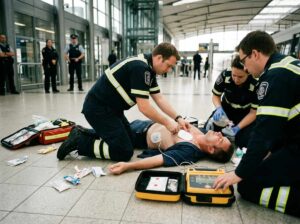
Defibrillation is important because it can treat certain life-threatening shockable rhythms during cardiac arrest. When VF or pulseless VT is present, early defibrillation is a critical part of the resuscitation response.
The American Heart Association’s 2025 guidelines state that early defibrillation is essential for survival when sudden cardiac arrest results from VF or pulseless VT, and that defibrillation is most successful when delivered as soon as possible after the onset of these rhythms.
Why Is Early Defibrillation Important?
Time matters during a cardiac emergency.
The longer a shockable rhythm continues, the more difficult successful defibrillation can become. The AHA therefore emphasizes prompt defibrillation along with high-quality CPR as part of the response to cardiac arrest caused by VF or pulseless VT.
This does not mean that defibrillation replaces CPR or other emergency treatment. Rather, it is one part of a coordinated response.
For healthcare facilities, this makes equipment readiness an important consideration.
Why Does Defibrillator Readiness Matter?
A defibrillator cannot support an emergency response if it is unavailable or not functioning as expected.
Readiness can involve several practical factors, including:
- Battery condition
- Electrode or pad condition
- Cables and connectors
- Device self-tests
- Error indicators
- Alarms
- Physical condition
- Functional performance
The exact checks depend on the device model and manufacturer requirements.
For example, FDA-hosted manufacturer documentation for AEDs includes readiness checks involving batteries, indicators, voice prompts, displays, and defibrillation pads.
What Can Happen When Defibrillator Equipment Has a Problem?
Equipment problems can create operational challenges during an emergency.
A device may display an error, fail a self-test, have a depleted battery, or show damage to a cable or electrode. These issues should be addressed according to the manufacturer’s instructions and the facility’s equipment-management procedures.
The goal is not simply to repair a device after it fails. A strong biomedical equipment program also looks for problems before they cause unexpected downtime.
Why Is Defibrillator Testing Important?
Testing helps healthcare facilities evaluate whether equipment is operating as intended.
Depending on the device, professional testing may include functional checks, electrical safety testing, performance verification, inspection, and calibration where applicable.
Testing requirements vary by equipment model and manufacturer, so healthcare facilities should not rely on one universal testing procedure or schedule.
What Should Healthcare Facilities Check on a Defibrillator?

Defibrillator maintenance involves more than turning the device on and checking whether the display works.
Battery and Power Systems
Battery condition is an important part of equipment readiness, particularly for AEDs and battery-powered defibrillators.
Facilities should follow the manufacturer’s requirements for battery inspection, replacement, charging, storage, and testing.
Pads, Cables, and Accessories
Electrodes, cables, connectors, and other accessories should be inspected according to the device manufacturer’s instructions.
Damaged, expired, or otherwise unsuitable components can affect equipment readiness.
Controls, Alarms, and Self-Tests
Many modern defibrillators perform automatic or scheduled self-tests. These checks can evaluate selected components of the device and alert users when attention may be needed.
However, a self-test does not replace all required professional inspection and maintenance.
Electrical and Performance Testing
Biomedical equipment professionals can perform applicable performance and safety checks using appropriate test equipment.
These evaluations can help identify issues that may not be obvious during a basic visual inspection.
Defibrillator Testing, Maintenance, and Repair for Healthcare Facilities
Regular maintenance helps healthcare facilities manage equipment before problems become unexpected disruptions.
What Does Defibrillator Preventive Maintenance Include?
Preventive maintenance varies by device and manufacturer. It may include equipment inspection, functional testing, battery and accessory checks, electrical safety testing, performance verification, and documentation.
The maintenance schedule should be based on manufacturer requirements, facility policies, equipment use, and applicable standards.
When Does a Defibrillator Need Professional Repair?
Professional repair may be appropriate when a defibrillator:
- Repeatedly fails a self-test
- Displays recurring error messages
- Has battery or charging problems
- Shows physical damage
- Has damaged cables or connectors
- Does not operate as expected
- Fails applicable performance checks
A biomedical equipment professional can evaluate the device and determine whether repair, further testing, or replacement is appropriate.
Why Use a Biomedical Equipment Service Provider?
Healthcare facilities manage many types of medical equipment at the same time. Working with a biomedical equipment service provider can provide access to specialized troubleshooting, preventive maintenance, testing, repair, calibration, and documentation support.
Syracuse Biomedical Services provides biomedical equipment repair and maintenance services for healthcare facilities in Syracuse and surrounding Central New York areas. Its current service information specifically lists defibrillators, including AEDs and manual defibrillators, among the equipment it supports.
The company also offers preventive maintenance, calibration, on-site and in-house repair, and compliance testing and documentation support.
Why Consider Defibrillator Support Before an Equipment Problem?
Waiting for a critical device to fail can create unnecessary disruption.
A planned maintenance approach allows healthcare facilities to schedule inspections, address developing problems, maintain service records, and better manage equipment over its useful life.
Syracuse Biomedical Services describes a preventive maintenance process that includes assessment, scheduling, maintenance, performance validation, and ongoing recommendations.
Is Your Defibrillator Ready When It Is Needed?
Defibrillation can be a critical treatment during certain cardiac emergencies, but reliable treatment also depends on having equipment that is ready to perform when needed.
For healthcare facilities in Syracuse and surrounding Central New York, Syracuse Biomedical Services can support your equipment-management needs through biomedical equipment repair, preventive maintenance, calibration, testing, and documentation services.
If your facility needs defibrillator maintenance, testing, repair, or broader biomedical equipment support, explore Syracuse Biomedical Services or contact the team to discuss your equipment needs.