
A pulse oximeter is one of the most commonly used patient monitoring devices in hospitals, clinics, emergency departments, and even home healthcare settings. It provides a quick estimate of blood oxygen saturation (SpO₂) and pulse rate, helping healthcare providers assess a patient’s condition in seconds. However, the reading is only useful if it is accurate.
Knowing how to read a pulse oximeter correctly is just as important as using the device itself. Factors like nail polish, cold hands, poor circulation, movement, or even equipment issues can produce false or inconsistent readings. Understanding these limitations can help healthcare professionals make better decisions and avoid unnecessary repeat tests or patient concerns.
What Can Cause False or Inaccurate Pulse Oximeter Readings?
Pulse oximeters work by shining red and infrared light through a finger, toe, or earlobe to estimate how much oxygen is being carried by the blood. While the technology is reliable under normal conditions, several external and patient-related factors can affect the accuracy of the measurement.
How Does a Pulse Oximeter Measure Oxygen Levels?
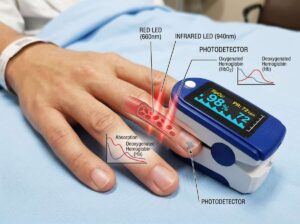
A pulse oximeter measures two primary values:
- SpO₂ (oxygen saturation): The estimated percentage of oxygen attached to red blood cells.
- Pulse rate: The number of heartbeats per minute.
The device detects changes in light absorption as blood flows through small blood vessels. Because it relies on proper blood circulation and sensor performance, even small interruptions can affect the reading.
For the best results, the sensor should fit properly, the patient should remain still, and the monitored finger should have good circulation.
Common Causes of False Pulse Oximeter Readings
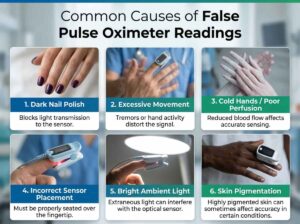
Several everyday factors can interfere with pulse oximeter accuracy.
Dark Nail Polish or Artificial Nails
Dark-colored nail polish, acrylic nails, or thick gel coatings can block the sensor’s light, causing inaccurate SpO₂ readings. When possible, place the sensor on a finger without nail polish or use an alternate site approved by the manufacturer.
Cold Hands or Poor Circulation
Cold temperatures reduce blood flow to the fingers, making it more difficult for the sensor to detect a strong pulse signal. Warming the patient’s hands before testing often improves accuracy.
Excessive Movement
Patient movement is one of the most common causes of unstable readings. Tremors, shivering, or simply moving the hand during measurement may produce fluctuating oxygen saturation values.
Incorrect Sensor Placement
If the probe is not positioned correctly or is too loose, the device may struggle to detect blood flow consistently.
Bright Ambient Lighting
Direct sunlight or strong surgical lights may interfere with the sensor if it is not adequately shielded.
Dirty or Damaged Sensors
Dust, residue, or worn sensor components reduce measurement quality. Regular cleaning and inspection help maintain reliable performance.
Weak Batteries or Aging Equipment
Low battery power or aging electronics can affect device performance over time. Preventive maintenance and calibration help ensure continued accuracy.
Medical Conditions That Can Affect Pulse Oximeter Accuracy
Certain medical conditions can also make pulse oximeter readings less reliable.
Examples include:
- Low blood pressure
- Poor peripheral circulation
- Severe anemia
- Shock
- Carbon monoxide exposure
These conditions may reduce blood flow or affect how oxygen is measured. Pulse oximeter readings should always be interpreted alongside the patient’s symptoms, physical assessment, and other diagnostic findings rather than used as the sole basis for clinical decisions (U.S. Food & Drug Administration [FDA], 2024).
Frequently Asked Questions About Pulse Oximeter Accuracy
Why does my pulse oximeter reading keep changing?
Small fluctuations are normal, especially if the patient is moving or has cold hands. Waiting for the reading to stabilize usually provides a more consistent result.
Can nail polish affect oxygen saturation readings?
Yes. Dark nail polish and artificial nails can interfere with the light sensor and reduce measurement accuracy.
Do cold fingers cause inaccurate readings?
Yes. Reduced circulation makes it more difficult for the sensor to detect blood flow accurately.
How accurate are pulse oximeters?
Most medical-grade pulse oximeters provide reliable estimates when used correctly, but no device is perfect. Readings should always be interpreted within the patient’s overall clinical picture (FDA, 2024).
How to Read a Pulse Oximeter When Nail Polish, Cold Hands, or Movement Affect Results

Understanding how to read a pulse oximeter correctly helps reduce unnecessary concern and improves confidence in patient monitoring.
Step-by-Step Guide to Reading a Pulse Oximeter Correctly
Follow these simple steps:
- Allow the patient to rest for several minutes.
- Warm cold hands if necessary.
- Remove dark nail polish when possible.
- Place the sensor securely on the correct finger.
- Keep the hand still during measurement.
- Wait until the numbers stabilize.
- Record both SpO₂ and pulse rate.
- Compare the reading with the patient’s symptoms and medical history.
A single reading should not be viewed in isolation. If results appear unusual, repeat the measurement after correcting any factors that may interfere with accuracy.
What Is Considered a Normal Pulse Oximeter Reading?
The following table provides a general reference:
| SpO₂ Reading | General Interpretation* |
| 95%–100% | Typical for many healthy individuals |
| 91%–94% | May require further evaluation depending on the patient’s condition |
| 90% or below | Often considered low and may require prompt medical assessment |
*Normal oxygen saturation levels vary based on age, chronic health conditions, altitude, and physician recommendations.
Healthcare providers should always interpret oxygen saturation alongside the patient’s overall condition instead of relying on one number alone.
Tips for Improving Pulse Oximeter Accuracy
Healthcare facilities can improve monitoring reliability by following several best practices:
- Clean sensors according to manufacturer recommendations.
- Replace damaged probes promptly.
- Keep patients still during measurement.
- Follow proper finger placement techniques.
- Inspect equipment regularly for wear or damage.
- Schedule preventive maintenance and calibration.
- Train staff on proper device operation.
Routine maintenance is especially important for hospitals and clinics where patient monitoring equipment is used continuously throughout the day.
Signs Your Pulse Oximeter May Need Professional Inspection
Even high-quality equipment requires regular servicing.
Watch for signs such as:
- Frequent inconsistent readings
- Damaged cables or probes
- Display errors
- Battery problems
- Failed performance checks
- Physical wear or cracks
When these issues appear, having the equipment inspected by qualified biomedical professionals helps maintain reliable performance and supports patient safety.
Keep Diagnostic Equipment Performing at Its Best with Expert Biomedical Services
Accurate patient monitoring depends not only on proper technique but also on well-maintained equipment. Preventive maintenance reduces unexpected failures, improves measurement reliability, and helps healthcare facilities stay compliant with manufacturer recommendations and industry standards.
Why Preventive Maintenance Matters for Patient Monitoring Equipment
Routine biomedical service offers several long-term benefits:
- Improved diagnostic accuracy
- Reduced equipment downtime
- Longer equipment lifespan
- Lower repair costs
- Better patient safety
- Increased confidence in clinical decision-making
Organizations such as the Association for the Advancement of Medical Instrumentation (AAMI) recognize preventive maintenance, performance verification, and risk-based equipment management as key elements of an effective medical equipment management program that supports patient safety and equipment reliability
Professional Biomedical Services That Improve Equipment Reliability
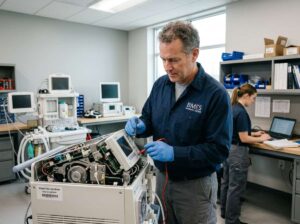
For healthcare providers across Central New York, Syracuse Biomedical Services helps keep medical equipment operating safely and reliably. Services include:
- Preventive maintenance
- Medical equipment inspections
- Calibration services
- Diagnostic equipment repair
- Electrical safety testing
- Refurbished medical equipment
- Equipment asset management support
By maintaining equipment before problems arise, healthcare facilities can reduce disruptions and provide dependable patient care.
When Healthcare Facilities Should Schedule Equipment Maintenance
Preventive maintenance should be scheduled:
- According to manufacturer recommendations
- Before accreditation surveys
- After major repairs
- When equipment shows inconsistent performance
- Whenever sensors or accessories become worn
A proactive maintenance plan helps ensure equipment continues delivering accurate readings throughout its service life.
Conclusion
Accurate pulse oximeter readings begin with understanding both the device and the conditions that affect its performance. Learning how to read a pulse oximeter correctly helps healthcare professionals recognize when readings are reliable and when additional assessment may be needed.
Just as important, maintaining patient monitoring equipment through regular inspections, calibration, and preventive maintenance helps ensure consistent performance over time. Whether you’re managing a hospital, outpatient clinic, or long-term care facility in Central New York, dependable equipment supports better clinical decisions and improved patient care.
If you’re looking to extend the life of your diagnostic equipment, reduce downtime, and improve equipment reliability, Syracuse Biomedical Services offers experienced biomedical equipment maintenance, repair, calibration, inspections, and refurbished equipment solutions. Contact our team today to learn how our services can help keep your medical equipment performing at its best.
Frequently Asked Questions
1. What does a pulse oximeter measure?
It measures blood oxygen saturation (SpO₂) and pulse rate.
2. What can cause inaccurate pulse oximeter readings?
Cold hands, movement, nail polish, poor circulation, incorrect sensor placement, and damaged equipment can affect accuracy.
3. What is a normal pulse oximeter reading?
For many healthy individuals, an SpO₂ reading of 95%–100% is considered typical.
4. Why does my pulse oximeter reading keep changing?
Movement, cold fingers, or poor circulation can cause fluctuating readings. Keeping the hand still and allowing the reading to stabilize can help.
5. When should a pulse oximeter be inspected or serviced?
Frequent inconsistent readings, damaged probes, display errors, battery problems, or failed performance checks may indicate the need for professional inspection.


