
Patient monitoring technology plays a vital role in modern healthcare. From hospitals and surgical centers to physician offices and outpatient clinics, a patient monitor provides real-time information that helps healthcare providers make informed decisions about patient care.
When a patient’s condition changes, even slightly, monitoring equipment can provide an early warning. This allows clinicians to respond quickly and improve patient outcomes. However, these benefits depend on one critical factor: accurate and reliable equipment performance.
In this guide, we’ll explore what vital signs a monitor can measure, how accurate these devices are, what affects their performance, and why professional testing and verification services are essential for healthcare facilities.
What Vital Signs Can a Patient Monitor Measure and Track?
Most monitors measure heart rate, blood pressure, oxygen saturation (SpO₂), respiratory rate, and body temperature. Advanced systems may also monitor end-tidal carbon dioxide (EtCO₂), invasive blood pressure, and cardiac output.
These measurements help clinicians assess a patient’s overall health and identify changes that may require medical attention.
What Is a Patient Monitor?

A patient monitor is a medical device that continuously tracks physiological data and displays it in an easy-to-read format. These systems help healthcare teams monitor patient status during treatment, recovery, surgery, and critical care situations.
Patient monitors are commonly used in:
- Hospitals
- Emergency departments
- Intensive care units
- Ambulatory surgery centers
- Physician practices
- Long-term care facilities
Why is patient monitoring important?
Patient monitoring helps healthcare providers detect changes in patient condition quickly, allowing for timely intervention and improved care.
What Vital Signs Can a Patient Monitor Measure and Track?

Modern monitoring systems can track multiple vital signs simultaneously, giving healthcare professionals a comprehensive view of a patient’s condition.
Heart Rate and ECG Monitoring
Heart rate monitoring measures how many times the heart beats per minute. Electrocardiogram (ECG) monitoring records the heart’s electrical activity and helps identify abnormal rhythms.
Healthcare providers use ECG data to detect:
- Arrhythmias
- Bradycardia (slow heart rate)
- Tachycardia (fast heart rate)
- Cardiac abnormalities
How does a patient monitor measure heart rate?
ECG electrodes or pulse sensors detect heart activity and calculate heart rate in real time.
Blood Pressure Monitoring
Blood pressure monitoring provides important information about circulatory health.
Most patient monitoring equipment uses automatic blood pressure cuffs to measure:
- Systolic pressure
- Diastolic pressure
- Mean arterial pressure (MAP)
Q: Can monitors measure blood pressure automatically?
Yes. Most modern monitors can perform scheduled automatic blood pressure measurements throughout patient care.
Oxygen Saturation (SpO₂)
Pulse oximetry measures oxygen saturation levels in the blood.
SpO₂ monitoring is especially important for patients with:
- Respiratory illnesses
- Cardiovascular conditions
- Sleep disorders
- Surgical recovery needs
Pulse oximetry is widely used because it provides a noninvasive method of monitoring blood oxygen saturation and can help detect hypoxemia before obvious clinical signs appear (World Health Organization, 2011).
What does SpO₂ measure?
SpO₂ measures the percentage of oxygen-carrying hemoglobin in the bloodstream.
Respiratory Rate Monitoring
Respiratory rate measures the number of breaths a patient takes each minute.
Many clinicians consider respiratory rate one of the most important early indicators of patient deterioration because breathing changes often occur before other vital signs show abnormalities.
Why is respiratory rate important?
Changes in respiratory rate can indicate respiratory distress, infection, medication reactions, or other serious medical concerns.
Temperature Monitoring
Temperature monitoring helps clinicians identify:
- Infection
- Inflammation
- Recovery progress
- Treatment effectiveness
Both elevated and reduced body temperatures may indicate underlying health concerns that require further evaluation.
Why do patient monitors track temperature?
Temperature measurements help healthcare providers assess patient stability and detect potential infections or complications.
Advanced Monitoring Parameters
Some multiparameter monitoring systems can measure:
- End-tidal carbon dioxide (EtCO₂)
- Invasive blood pressure
- Cardiac output
- Central venous pressure
These advanced measurements are often used in critical care and surgical environments.
How Accurate Is a Patient Monitor and What Affects Performance?

Understanding what a patient monitor measures is only part of the picture. Healthcare providers must also trust that the measurements are accurate.
How accurate is a patient monitor?
When properly maintained and tested, patient monitors are designed to operate within manufacturer-specified accuracy ranges and clinical performance standards.
The U.S. Food and Drug Administration notes that many reusable medical devices require preventive maintenance and repair throughout their useful life, and that proper servicing is critical to their continued safe and effective use (U.S. Food and Drug Administration, 2024).
Factors That Affect Patient Monitor Accuracy
Several factors can impact monitor performance over time.
| Factor Affecting Patient Monitor Accuracy | How It Impacts Performance |
| Sensor Wear and Damage | Patient sensors experience regular use and can degrade over time. Damaged sensors may produce inconsistent readings, intermittent signals, or complete signal loss. |
| Cable and Connector Issues | Worn cables, loose connections, damaged lead wires, or connector failures can interrupt data transmission and result in inaccurate measurements or monitoring alarms. |
| Environmental Conditions | Electromagnetic interference (EMI), excessive humidity, dust, and temperature fluctuations can affect device performance and measurement reliability. |
| Aging Equipment Components | As patient monitors age, internal electronic components may drift from their original specifications, potentially reducing measurement accuracy and overall system performance. |
| Missed Preventive Maintenance | Without regular inspections, functional testing, and preventive maintenance, minor issues may go undetected and eventually affect monitor performance, reliability, and patient safety. |
What causes inaccurate patient monitor readings?
Common causes include worn sensors, damaged accessories, environmental interference, aging components, and insufficient preventive maintenance.
Risks of Inaccurate Monitoring
Inaccurate monitoring data can create significant challenges for healthcare providers.
Potential risks include:
- Delayed treatment decisions
- False alarms
- Missed clinical events
- Increased equipment downtime
- Regulatory compliance concerns
AAMI standards and recommended practices emphasize the importance of structured medical equipment management programs, including preventive maintenance and performance verification activities, to help support equipment reliability and patient safety.
Why is patient monitor accuracy important?
Accurate data helps clinicians make informed decisions and supports patient safety throughout the continuum of care.
Patient Monitor Performance Testing and Accuracy Verification Services
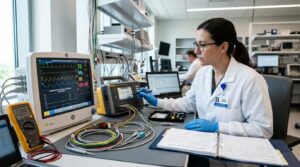
Healthcare facilities cannot rely solely on visual inspections to determine whether a patient monitor is functioning properly.
Professional performance testing helps verify that monitoring equipment continues to operate according to manufacturer specifications.
How can healthcare facilities verify patient monitor accuracy?
Through scheduled preventive maintenance, performance testing, functional inspections, and accuracy verification performed by qualified biomedical equipment professionals.
What Is Included in Patient Monitor Performance Testing?
A comprehensive testing program may include:
- Functional inspection
- ECG simulation testing
- SpO₂ verification
- Blood pressure accuracy testing
- Alarm function testing
- Electrical safety testing
- Documentation and reporting
These procedures help identify potential issues before they impact patient care.
Benefits of Professional Verification Services
Regular testing provides several advantages:
- Improved patient safety
- Reduced equipment downtime
- Enhanced clinical confidence
- Better regulatory readiness
- Extended equipment lifespan
- Improved asset management
How often should patient monitors be tested?
Testing frequency should follow manufacturer recommendations, facility policies, risk assessments, and accreditation requirements.
Why Healthcare Facilities Choose Syracuse Biomedical Services
Healthcare organizations throughout Central New York depend on reliable medical equipment to support patient care.
At Syracuse Biomedical Services, experienced biomedical equipment professionals provide comprehensive inspection, preventive maintenance, testing, calibration support, and repair services for patient monitoring systems and other critical healthcare equipment.
By implementing proactive maintenance programs, healthcare facilities can reduce unexpected failures, improve operational efficiency, and support regulatory compliance efforts.
Our team understands the unique challenges healthcare providers face and works closely with facilities to help ensure equipment performs safely and reliably.
Ensure Your Patient Monitors Deliver Accurate Results
Patient monitors are among the most important tools used in healthcare today. They provide critical information that helps clinicians make timely decisions and support positive patient outcomes.
However, monitoring data is only valuable when the equipment generating it is accurate and reliable. Routine performance testing, preventive maintenance, and professional verification services help ensure patient monitors continue to meet clinical expectations.
Ready to Verify Your Patient Monitor Performance?
If your healthcare facility needs patient monitor testing, preventive maintenance, equipment inspections, or biomedical equipment support, contact Syracuse Biomedical Services today.
Our experienced team can help you maintain reliable monitoring systems, improve equipment uptime, and support your patient safety goals.
Frequently Asked Questions
1. What is a patient monitor?
A patient monitor is a medical device that continuously tracks vital signs and displays patient data.
2. What does a patient monitor measure?
It can measure heart rate, blood pressure, SpO₂, respiratory rate, and temperature.
3. Where are patient monitors used?
They are commonly used in hospitals, ICUs, emergency departments, clinics, and surgical centers.
4. What can affect patient monitor accuracy?
Worn sensors, damaged cables, environmental interference, aging components, and missed maintenance can affect accuracy.
5. How often should patient monitors be tested?
Testing should follow manufacturer recommendations, facility policies, risk assessments, and accreditation requirements.
If you would like to explore more about biomedical equipment, you can access the following links:
- A Simple Guide to Understanding Sphygmomanometer Parts
- CT Scan Cost Explained: With and Without Insurance
- How Remote Patients Monitoring Devices Improve Patient Care
- Restrictions While Wearing A Holter Monitor
- How Much Do X Rays Cost Without Insurance? What to Expect in 2026


