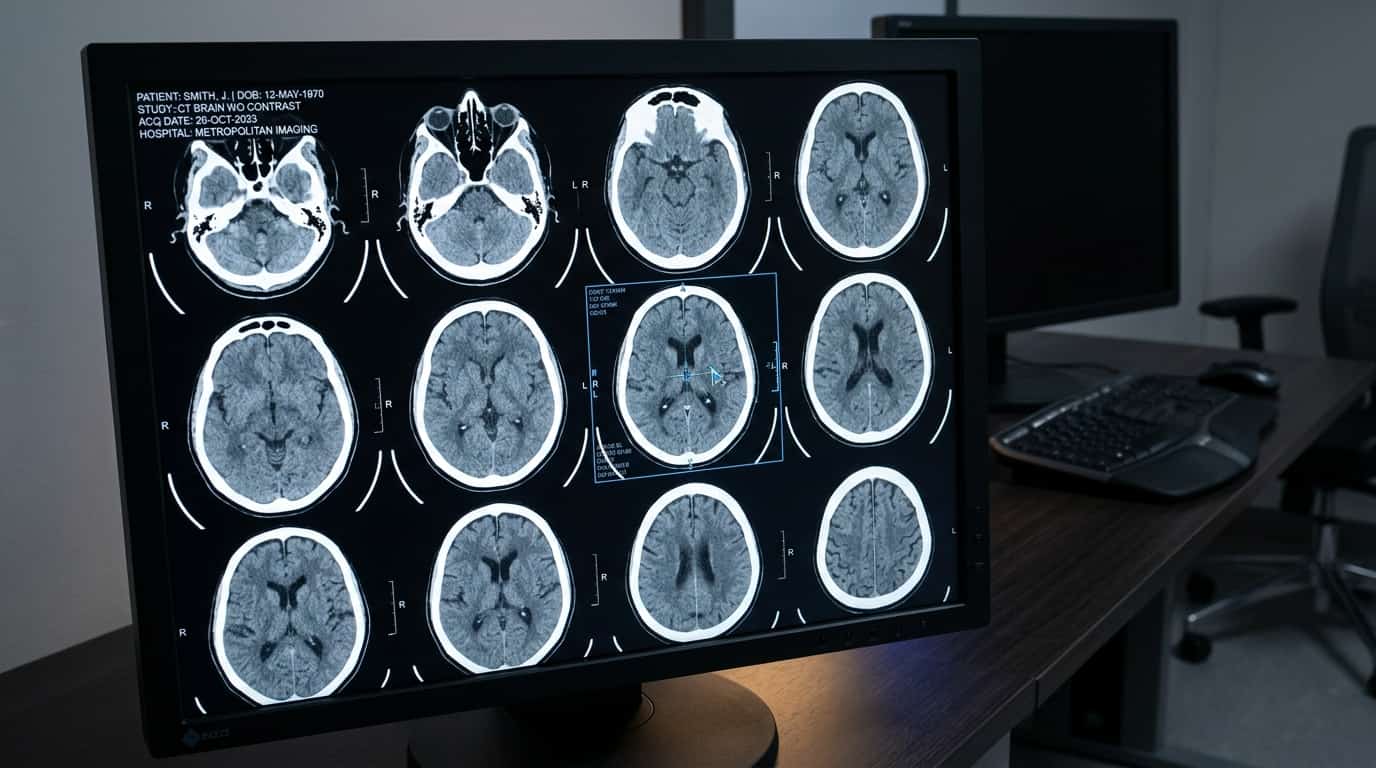
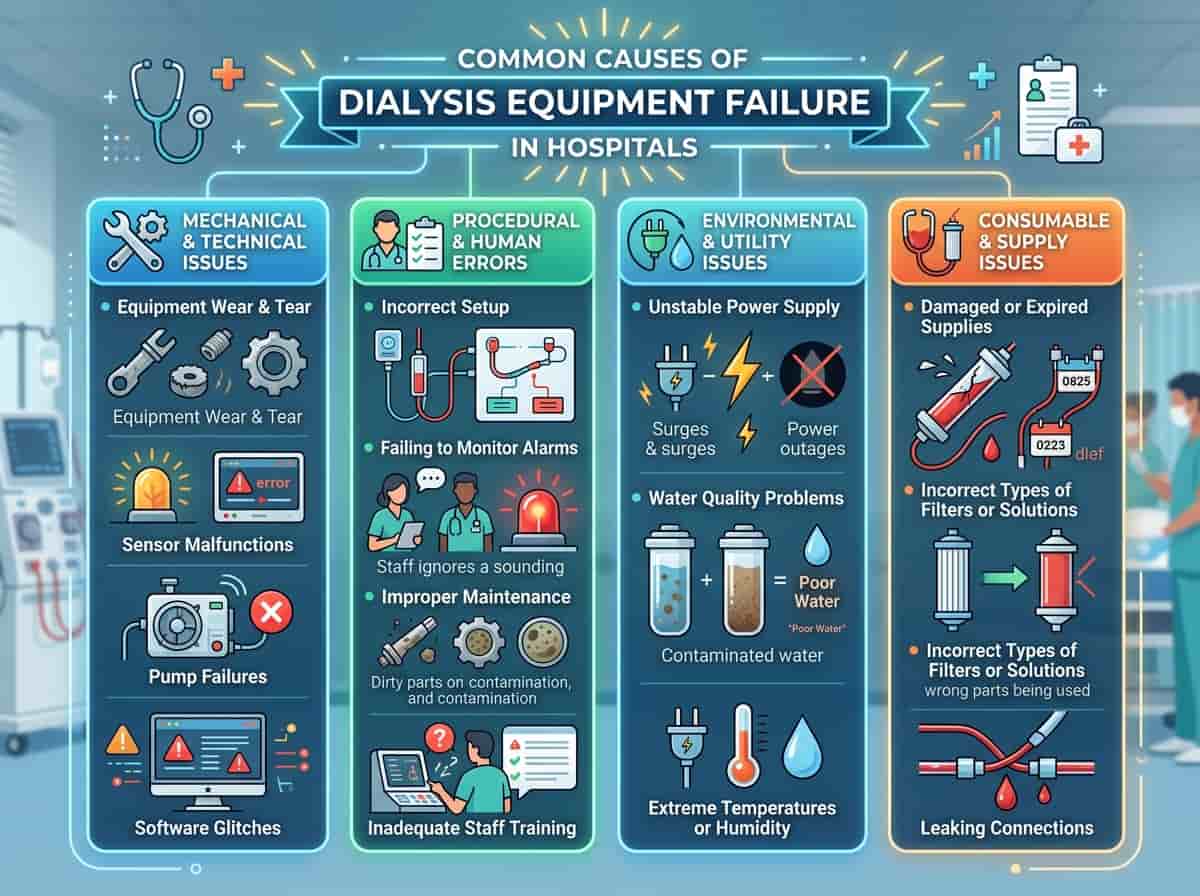
Modern hospitals depend heavily on medical equipment to deliver safe and effective care. Because of this, healthcare technology careers especially understanding what is biomedical equipment technician and the vital role they play have become essential.
Understanding Healthcare Technology Careers
Why are healthcare technology careers important in modern hospitals?
Healthcare technology careers are important because hospitals rely on machines for diagnosis, monitoring, and treatment.
Without properly working equipment:
- Patient care can be delayed
- Test results may be inaccurate
- Life-saving treatments may be interrupted
This highlights what is biomedical equipment technician a crucial role focused on maintaining, repairing, and calibrating medical devices to ensure they function safely and accurately.
Hospitals now depend on trained technical staff to keep systems running safely and continuously.
How do medical devices impact patient care?
Medical devices directly affect patient outcomes.
For example:
| Medical Device | Function in Healthcare |
| Ventilators | Support breathing in ICU patients |
| Heart monitors | Track vital signs in real time |
| Infusion pumps | Deliver controlled medication doses |
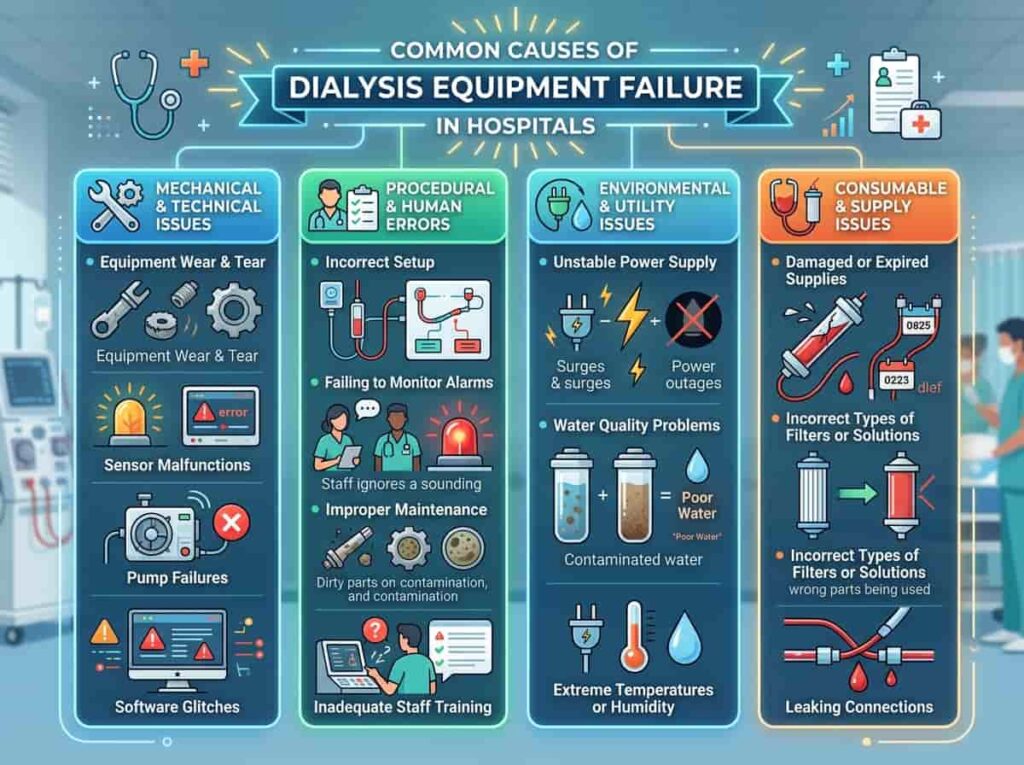
If these devices fail, patient safety is at risk. That is why hospitals focus heavily on maintenance and equipment reliability.
The FDA emphasizes that medical device safety and performance are essential to protecting patients, with continuous monitoring throughout the product lifecycle to identify and reduce risks in healthcare settings (U.S. Food and Drug Administration, Medical Device Safety Action Plan).
What is preventive maintenance in hospitals?
Preventive maintenance means checking and servicing medical equipment before it breaks.
It includes:
- Routine inspections
- Calibration checks
- Safety testing
- Early fault detection
This helps hospitals avoid unexpected breakdowns and improve patient safety.
What is a biomedical equipment technician?
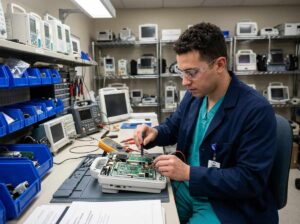
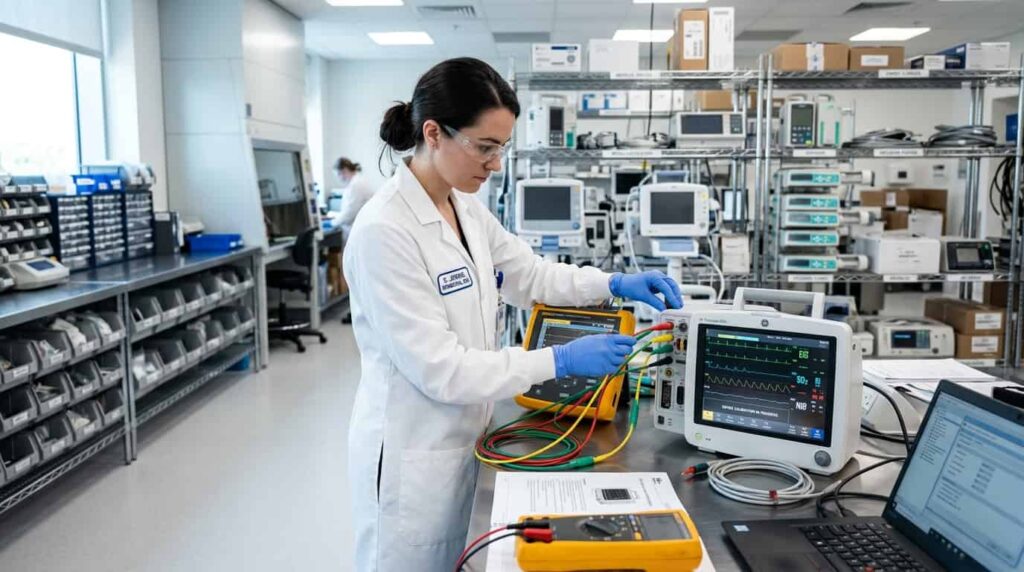
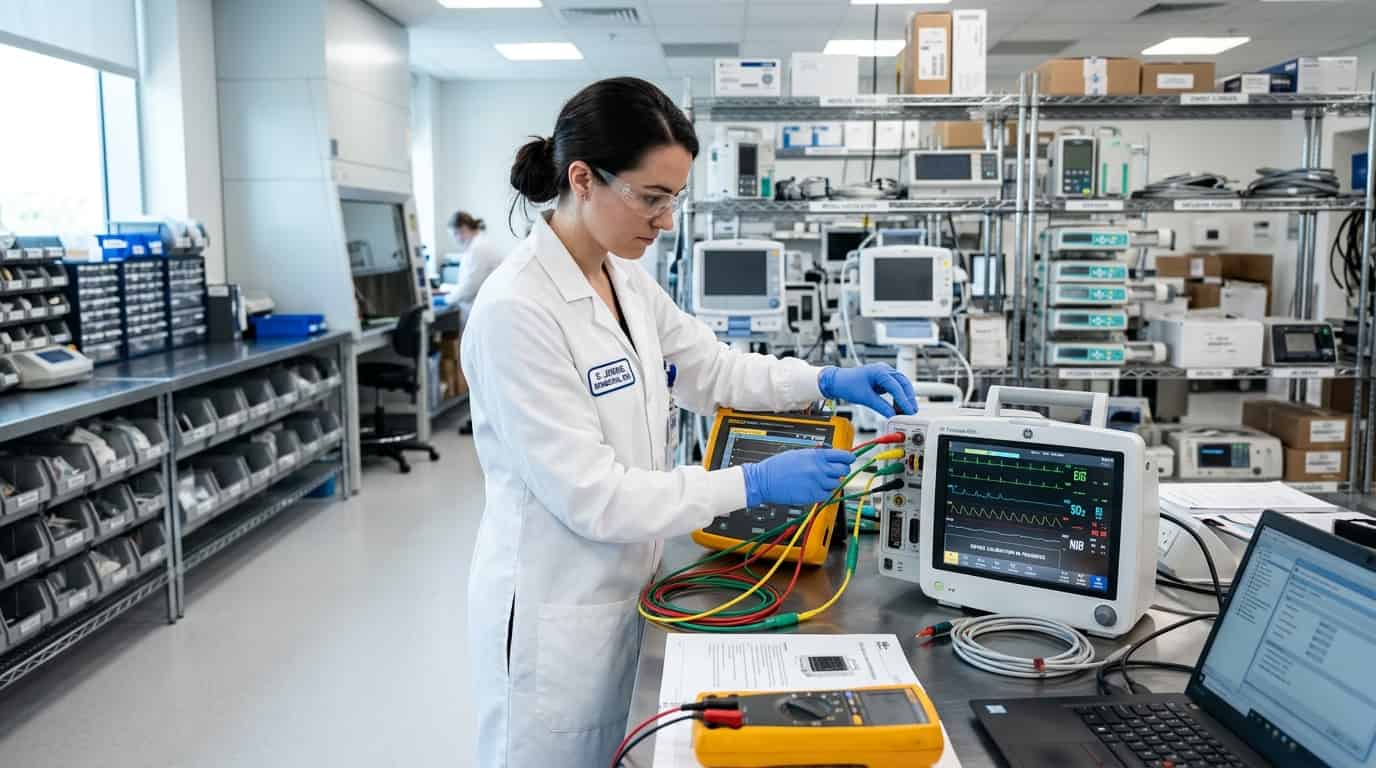
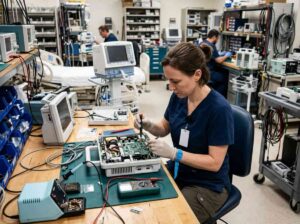
A biomedical equipment technician is a trained professional who installs, inspects, repairs, and maintains hospital medical equipment clearly defining what is biomedical equipment technician in today’s healthcare environment.
They make sure machines like:
- Patient monitors
- Ventilators
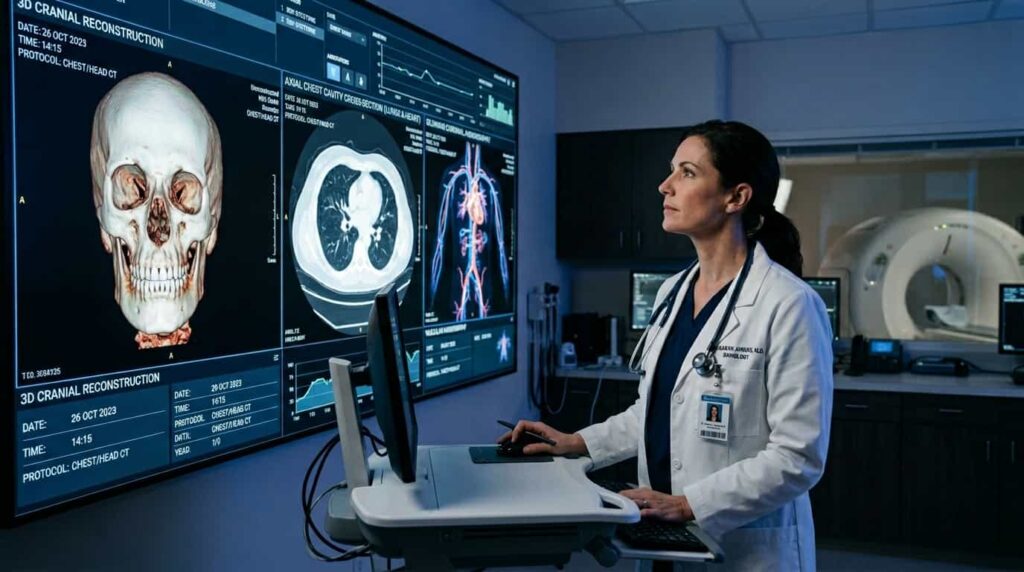
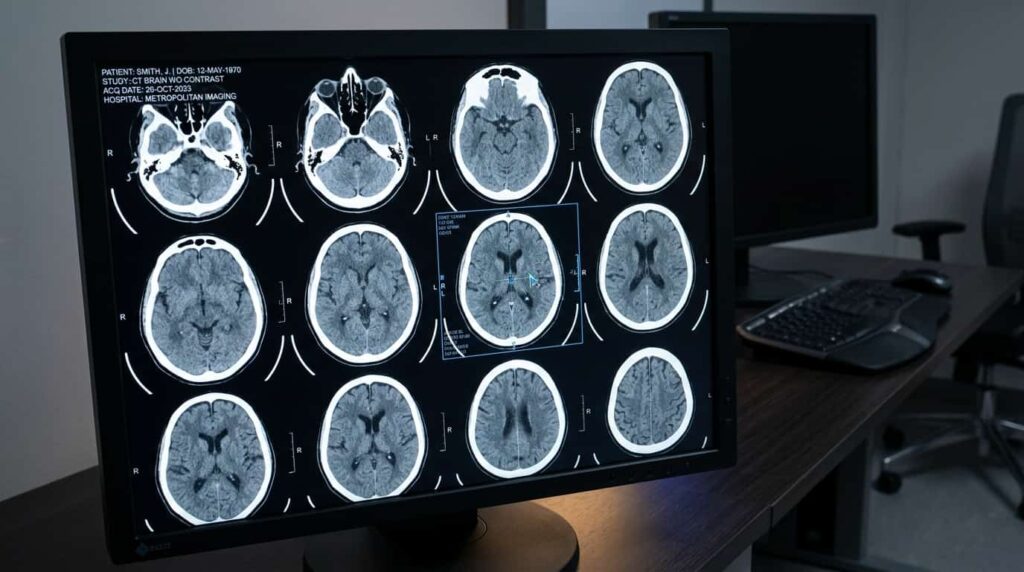
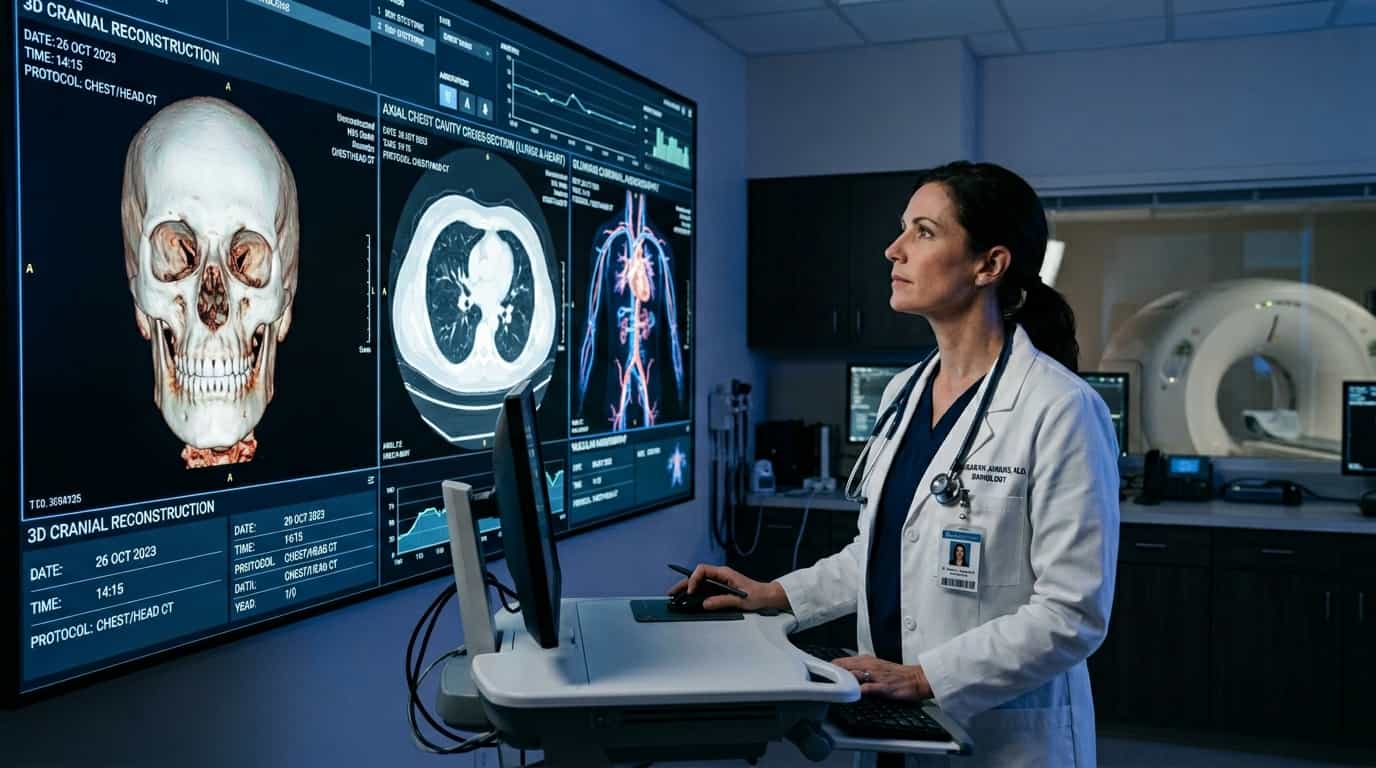
- Imaging systems
- Infusion pumps
are working safely and accurately.
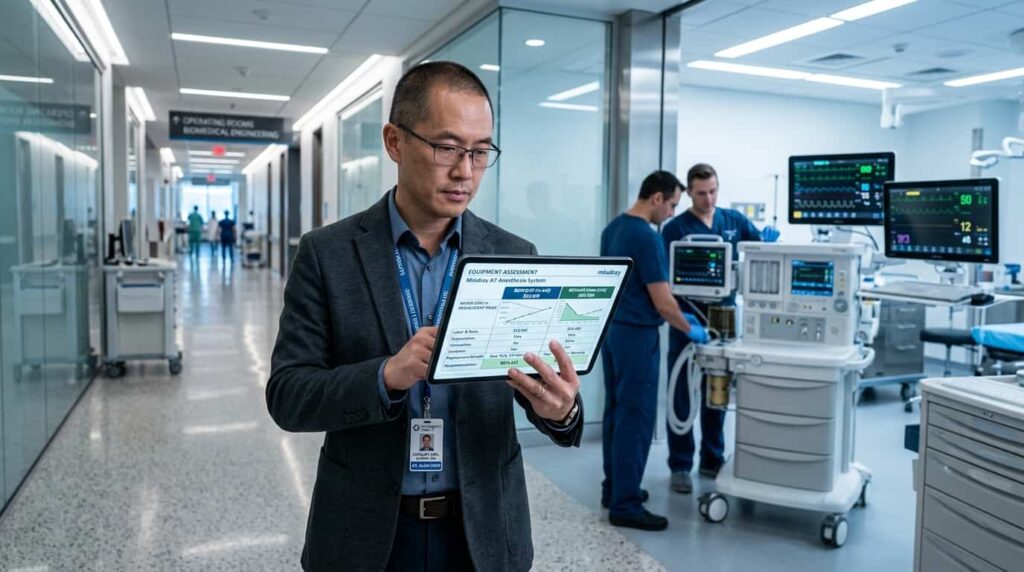
They are often part of clinical engineering teams inside hospitals or service providers.
What does a biomedical equipment technician do daily?
Their daily responsibilities include:
- Testing medical equipment for safety
- Repairing broken devices
- Calibrating machines for accuracy
- Performing preventive maintenance
- Supporting hospital staff with technical issues
They act as the technical backbone of hospital operations.
What education is needed to become a biomedical equipment technician?
Most biomedical equipment technicians complete programs that help define what is biomedical equipment technician in practice, including:
- An associate degree in biomedical technology
- Electronics or engineering-related training
Some also study:
- Electrical systems
- Computer-based medical devices
- Networking for modern hospital equipment
Do biomedical equipment technicians need certification?
Yes, many hospitals prefer certified technicians.
The most recognized certification is:
- CBET (Certified Biomedical Equipment Technician)
This certification shows knowledge of:
- Medical safety standards
- Equipment repair practices
- Healthcare compliance rules
It increases job opportunities and trust from employers.
How do biomedical equipment technicians get trained?
Training happens in two stages, which helps clarify what is biomedical equipment technician in real-world practice:
- Classroom learning (electronics + medical equipment basics)
- Hands-on hospital experience
Technicians learn by working with real devices under supervision, including manufacturer-specific systems.
What is the career growth for biomedical equipment technicians?
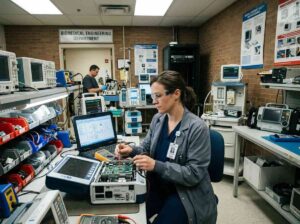
Career progression usually includes:
- BMET I (entry level)
- BMET II (experienced technician)
- Senior clinical engineering roles
- Healthcare technology management positions
As hospitals adopt more advanced technology, demand for skilled technicians continues to grow.
Services & Solutions
Why do hospitals outsource biomedical equipment services?
Hospitals outsource because they face:
- Staff shortages
- High equipment maintenance demands
- Increasing compliance requirements
Outsourcing helps them:
- Reduce costs
- Improve repair speed
- Access certified experts quickly
- Maintain equipment reliability
How does biomedical equipment staffing improve hospital performance?
Professional staffing ensures:
- Faster equipment repairs
- Less downtime
- Better patient care continuity
- Reduced pressure on hospital staff
This improves both operational efficiency and patient safety.
What services does Syracuse Biomedical Services provide?
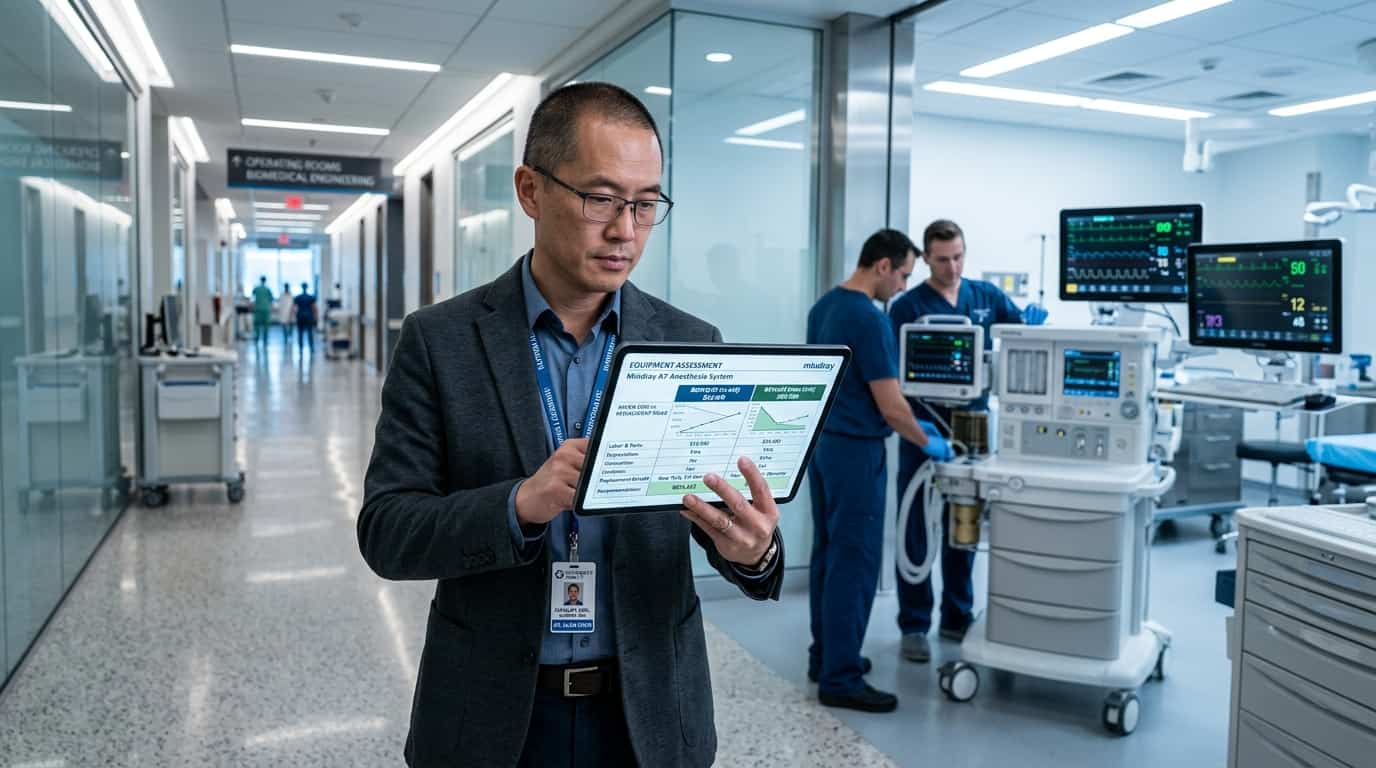
Syracuse Biomedical Services supports healthcare facilities with:
- Biomedical equipment maintenance
- Repair and troubleshooting services
- Preventive maintenance programs
- Staffing support for BMET roles
- Compliance-focused technical services
These services help hospitals maintain safe and reliable equipment systems.
How does biomedical equipment support improve patient safety?
When equipment is properly maintained:
- Machines work accurately
- Downtime is reduced
- Clinical staff can focus on patients
- Emergency risks are minimized
This directly improves patient outcomes and hospital efficiency.
When should a hospital consider biomedical equipment support services?
Hospitals should consider support services when:
- Equipment downtime increases
- Staff shortages occur
- Compliance requirements become difficult to manage
- Repair delays affect patient care
External support helps stabilize operations quickly.
Final Answer
Biomedical equipment technicians are essential healthcare professionals who ensure that medical devices work safely and correctly. They support hospitals by maintaining, repairing, and inspecting critical equipment used in patient care every day.
Without them, hospitals face higher risks of equipment failure and treatment delays.
Call to Action
If your healthcare facility needs reliable equipment support, staffing, or maintenance services, expert help is available.
Visit https://syracusebiomedicalservices.com/ to learn how Syracuse Biomedical Services can help your hospital improve equipment reliability, reduce downtime, and strengthen patient safety through professional biomedical equipment support.
Additional information can be found through the links below:
- A Simple Guide to Understanding Sphygmomanometer Parts
- CT Scan Cost Explained: With and Without Insurance
- Trust the Experts for Delicate Lens Care: Learn How to Clean the Microscope Lens Without Common Pitfalls
- Restrictions While Wearing A Holter Monitor
- How Much Do X Rays Cost Without Insurance? What to Expect in 2026